


Trend: circularity. But what actually is it?
Circularity is the buzzword of the moment. But what actually is ‘circularity’? Can you eat it? Yes. You can!

How dare you
With climate activist Greta’s lingering ‘how dare you’ ringing in their ears, companies nowadays want to show that they are thinking seriously about being climate-friendly. We see this trend in the hospitality industry too. More and more bars and restaurants announce that they are banning straws and thinking sustainably, while some even claim to be circular.
Preserving and fermenting
CIRCL, for example, on Amsterdam’s Zuidas. Former Vermeer chef Rudolf Brand cooks according to circular principles, such as preserving and fermenting, so that you can keep products longer, use less energy and produce less waste. Call it greenwashing by owner ABN-AMRO, but that would do this restaurant a disservice, because what you eat here is good and, more importantly, thought-provoking. You can also eat circularly in Utrecht, at The Green House. They serve insect burgers, for example, and their aim is to cook without electricity in the future. Even now, they heat with biofuels such as olive pits and coconut shells. Yes, go ahead and feel nice and guilty when you slide a plastic container into the microwave later.
Old food hypes
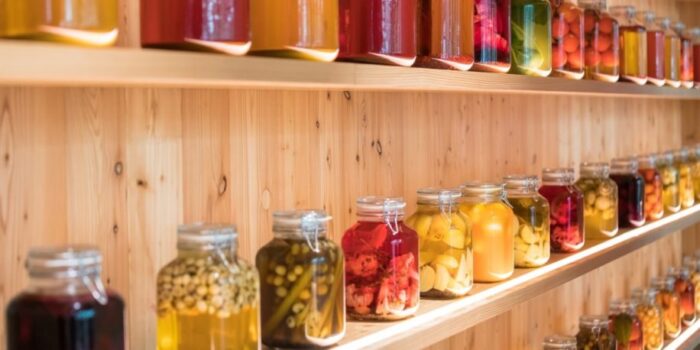
Another example is the Amsterdam pop-up THUISBASIS. In summer you can get ice cream here, but this tiny little place is currently cooking with an equally tiny ecological footprint. Chefs and friends Bryce Steba and Paul van den Brink also mainly get you thinking. For example, by serving ingredients that used to be trendy and are now being overproduced, such as spelt or avocado. Or by serving celeriac in such a way that you think you are eating meat, and preparing a banana so that you can even eat the peel. Or by ordering a fish several metres long, which can be eaten for months because the different parts are dried or pickled. ‘Past its sell-by date’ is so passé! Little waste and still a feast, in this little place decorated with hanging plants and reclaimed wood. On the windowsill are preserving jars in which things are being fermented festively.
Tupperware
That fermenting is still a bit of an issue, by the way, because the Netherlands Food and Consumer Product Safety Authority cannot quite handle the fact that so many bacteria are inhabiting a bubbling container, as they still think in terms of Tupperware containers bearing a clear use-by date and a ‘this makes me happy’ sticker.
Hard-core marketing
QO also claims to be circular with restaurant Persijn. Local, sustainable products, preferably from the greenhouse on the roof. That sounds nice. In practice, a twig or tomato may sometimes come from there, but of course there is far too little capacity to source all your fish and greens from it. Yes, of course these are primarily marketing concepts responding to today’s growing demand for green credentials. Is that bad? No, this hospitality industry gets you thinking. About the products you eat, where they come from and what is left over. Or about whether we should enjoy delicious food for a little while longer, before the last inhabitant of Earth pulls the plug.
Image: Circle Amsterdam, ©Floris Heuer
Also read:


