



Ugh! This is how dirty a dish brush is: ‘breeding ground for bacteria’
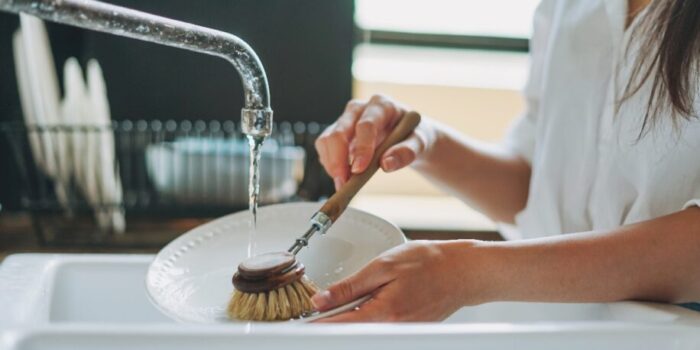
The yellow cloth is hands down number 1 the grossest kitchen thing we know. A scrunched-up, slimy rag on the counter is something that makes the hairs on the back of our necks stand straight up. At number 2: the dish brush. If you don’t clean it regularly, it can have more bacteria on it than a toilet seat. Whaaat?!

Putting your hands in the soapy water after a long day at work is said to be incredibly relaxing and reduce stress. Either way, blowing into sticky washing-up gloves and floating bits of food give me the creeps when doing the dishes—and from now on, so does the dish brush…
Breeding ground for bacteria
A dish brush is a breeding ground for bacteria because of the leftover food particles that remain in it when you put it back in the kitchen cupboard. Yes, in the cupboard, because simply leaving it lying around in the sink is a no-go for tidy types like yours truly. Just like pretty much everything else in the kitchen, you should also give that dish brush a clean every now and then. You don’t actually have to do much more than put it in the dishwasher and let it run through a cycle. This kills the vast majority of the bacteria.
If you don’t have a dishwasher, or if the brush is made of wood, it’s best to soak it in a mixture of cleaning vinegar and a drop of dish soap.
When should you replace it?
How often you need to clean the dish brush naturally depends on whether you use it frequently or just scrub a pan with it occasionally. Still, it can’t hurt to clean the brush once a week. And you know: when the bristles start sticking out and look a little flattened, the brush is definitely due for replacement.
Read also:
- Dirty plastic cutting boards: how to get them really clean again
- 11x the best cleaning hacks we’ve ever seen (thanks, Grandma!)
- How to properly clean a knife block
Source: RTL nieuws


