


We’re being seriously misled by Knorr’s vegetable pastas
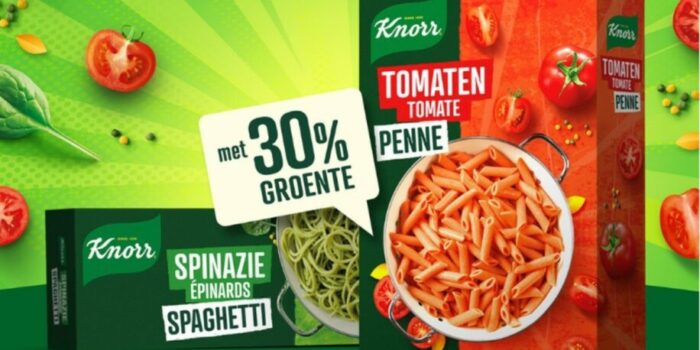
Knorr, Knorr, Knorr, really. The brand doesn’t exactly have the best reputation when it comes to misleading products. In 2021, their Poké Bowl mix was nominated for the most misleading product of that year. The packaging says ‘lots of delicious vegetables’, while it contains just 5% red bell pepper (in the topping mix…). And their farmer’s omelette mixes mislead us too. They’re supposed to contain onion and leek, but the leek is nowhere to be found. Now it seems we’re being led astray by yet another Knorr product: their vegetable pastas.

Say what?! Knorr, how can we ever trust those blue (er, green) eyes of yours again?
The claimer: Upfront
The misleading claims are being brought to light by Upfront. They want to be honest and transparent about food. They do this not only by highlighting misleading products, but also by bringing ‘fully transparent products’ to market themselves. Products with packaging without colour or claims, displaying only the ingredients and nutritional values. This way, consumers aren’t tempted by attractive packaging, but actually buy the product for what it is. Upfront’s motto: what is sincere wins. A company with a beautiful mission, then.
No vegetables, but purée, powder or concentrates
Upfront claims that Knorr’s vegetable pastas are misleading. What’s going on? The packaging of this product says that the pastas contain 30% vegetables. But according to Upfront, this claim is incorrect. All the vegetables in the Knorr pastas are said to have been puréed, powdered or concentrated. As a result, many vitamins are lost from the vegetables before you eat the pasta. Two examples: Knorr’s spinach penne contains 24% spinach purée, while the tomato spaghetti contains 22% tomato purée. Upfront also calls them ‘expensive white pastas with an (expensive) splash of colour’. So they appear to be healthier pastas, while in reality they are disappointing.
More misleading brands
According to Upfront, there are more brands engaging in similar deception. For example, Albert Heijn’s own-brand vegetable crackers contain 15% vegetable powder instead of real vegetables. The so-called Carrot Stix from Organix, a baby food brand, contain 10.1% carrot purée. And according to Upfront, Bolletje’s vegetable crackers are also misleading because of the 50% vegetable claim on the packaging. That’s because those 50% vegetables consist of 57% kidney beans and 43% spinach, carrot or beetroot purée.
Bolletje disagrees with this, incidentally. In a response, they say that they have to purée the vegetables because they cannot process them whole in the crackers. They also say that the vegetables add plenty of fibre and protein to the crackers, while reducing the carbohydrates. Upfront responds that, in their opinion, adding vegetables to a product is unnecessary. It creates the illusion that the product is healthier, while many nutrients are lost during processing. Wholegrain products contain more fibre and are often cheaper too.
Better: choose wholegrain
The Keuringsdienst van Waarde has also previously raised serious questions about products containing vegetables. Their investigations show that you’re seriously being conned by most vegetable wraps and vegetable crisps. Even though you pay a hefty price for them. A smarter choice: simply go for wholegrain. Cheaper and much richer in fibre than those so-called vegetable products. Or make pasta from courgette or pumpkin yourself. Then you know for sure that your pasta consists of 100% vegetables.
Also read:
- 19 times we were seriously ripped off by misleading packaging
- Shrinkflation: this is how supermarkets seriously rip you off
- No longer available: Nicolette van Dam’s misleading vegetable sweets
Source and header image: Instagram Upfront and Instagram Knorr


