



What exactly is sugo in Italian cuisine?
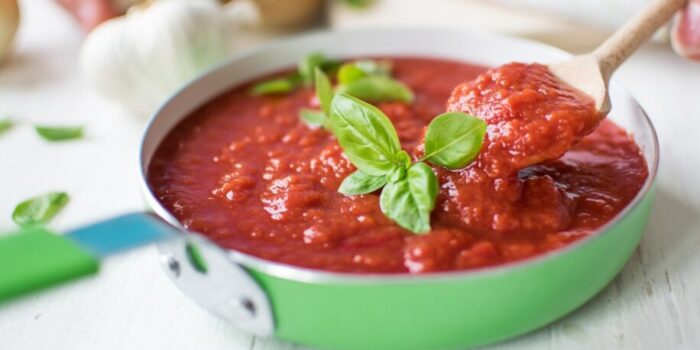
You can’t enter an authentic Italian kitchen without finding sugo in it. If it isn’t simmering on the stove, you’ll find it stored in the fridge. What exactly is sugo? And why is it so important in Italian cuisine?

Every Italian family has a sugo recipe passed down from their Nonna. The kind of recipe once scribbled on a — by now yellowed and stained — piece of paper, and now firmly etched in the minds of every member of the Italian family. The basis of sugo is set, but all those Nonnas have undoubtedly put their own spin on it too. As a result, sugo is truly a ‘family sauce’ for many Italian families.
Sugo: classic sauce
Yes, I’ve already given it away. In Italian, sugo can also be translated as ‘sauce’. It’s the classic tomato sauce found in all kinds of Italian dishes, from pasta and pizza to meat dishes. A true base sauce. You’re probably familiar with sauces such as ‘arrabiata’ and ‘marinara’; they’re all derivatives of sugo. Essentially, they are sugo, but by adding different ingredients, they have become sauces in their own right.
Quality and time
You don’t need that many ingredients for a classic sugo. The quality of the ingredients matters all the more. Preferably use San Marzano tomatoes: wonderfully sweet tomatoes that are somewhat similar to Roma tomatoes. (Watch out for fakes!) Nonnas pass these through a food mill. That is essentially your base. Instead of fresh tomatoes, you can also use canned tomatoes or a really good passata di pomodoro. Then you don’t need to strain them.
Next, you make sugo with good olive oil, some onion and garlic. Let the onion and garlic turn translucent in the pan. Before they start to brown, remove the garlic. Then pour in the strained tomatoes (or passata). Let this simmer in the pan for at least 3 hours. It’s precisely that long simmering time that gives your sauce extra flavour. Before serving the sauce, remove the onion and season it with a little salt. That’s it. Quality and time do most of the work here. The result is an absurdly flavourful sauce.
Overcooked
By now, quite a few Nonnas have also put their own spin on sugo. They add a spoonful of sugar, some dried herbs, fresh basil… In principle, you can season your sugo however you like. As long as you keep that quality and time in mind. Those old Nonnas absolutely lose their heads over quick sugos!
Also read:


