



What is the difference between fresh yeast, instant yeast and dried yeast?
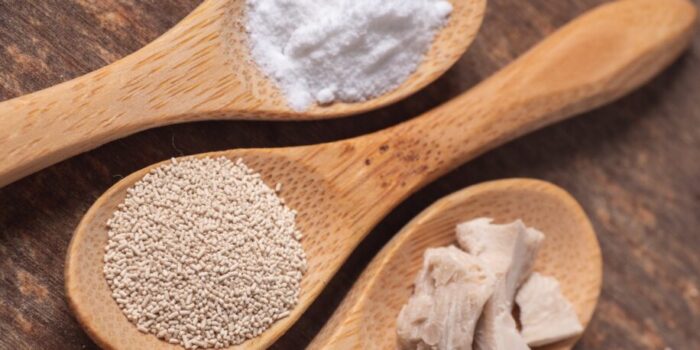
Yeast is the miracle ingredient that can turn a bowl of flour, water and salt into fluffy dough for, for example, this easy focaccia. But not every type of yeast is the same. We explain what types of yeast exist and how best to use them.

First things first: what exactly is yeast? Yeast is a microorganism, a single-celled fungus, that reacts to the sugars in the dough and converts them into CO2 (carbon dioxide) and alcohol. CO2 creates the bubbles in the dough. These gas bubbles push the dough upwards (the dough rising). The alcohol formed during fermentation evaporates during the baking process.
Instant vs. dried yeast
Instant yeast and dried yeast are the same, apart from the size of the granules. Dried yeast has a coarser grain, which means that before adding it to the other ingredients, you first need to dissolve it in lukewarm water. Instant yeast is much finer. You therefore do not need to dissolve instant yeast, as it is absorbed into the dough much more easily. These days, dried yeast is hardly used in the Netherlands, so all the yeast you find in the supermarket, even though it is sometimes called dried yeast, is instant yeast.
Fresh yeast
There is also the fresh variety. Fresh yeast is sold in cubes that are a slightly light brown colour. To use fresh yeast, you also need to dissolve it in lukewarm water first. In terms of how they work, instant yeast and fresh yeast hardly differ. Still, for breads whose dough needs to rise slowly and at a low temperature, it is best to use fresh yeast; it gives the bread a slightly more delicious flavour.
Wild yeast
Sourdough is also known as wild yeast (this is the difference between sourdough and yeast). And if all the yeast in the supermarket has run out, you can always try these alternatives to yeast or, for example, make a beautiful Japanese rainbow cake.
Also read:


