



What is the difference between gin and jenever?
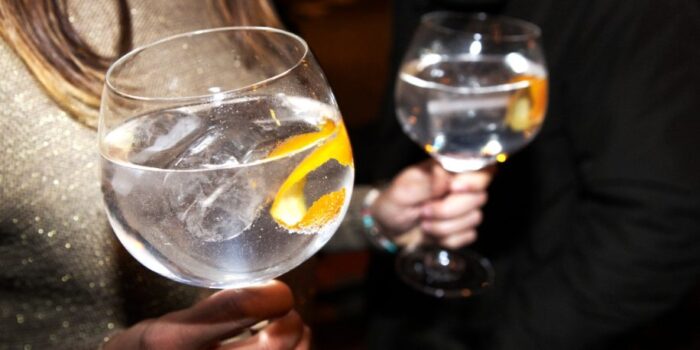
Gin, simply put vodka flavoured with juniper berries, to which other botanicals (such as flowers, roots, herbs and spices) have also been added, is often seen as a typically English spirit, but it isn’t. It is the English version of the Dutch jenever. Because of the juniper berries, people sometimes think that jenever is Dutch gin, but that isn’t true either. So what exactly is the difference between gin and jenever?

To start at the beginning: jenever consists of malt wine (made from grains) and neutral alcohol, distilled with juniper berries (and other flavourings). Gin does not contain malt wine, but the neutral (grain) alcohol is also flavoured with juniper berries (as required) and botanicals for extra flavour. You don’t drink gin neat, but with a (preferably premium) tonic that accentuates the characteristics of the gin.
The missing link between gin and whisky
You definitely shouldn’t mix jenever with tonic, because the flavour of this traditional drink (jenever has been made in the Netherlands for more than 400 years) is still quite far removed from that of gin. Cocktail hero Tess Posthumus therefore often explains to tourists that jenever is best seen as the missing link between gin and whisky. It contains juniper berries, which are also used for gin, but also the maltiness of whisky due to the addition of malt wine.
Essential: the juniper berry
Back to gin. Many alcoholic drinks begin their lives as medicines, and gin is no exception. Italian monks were already drinking life water made from ‘Junipero’ about a thousand years ago. And in Der Naturen Bloeme (1269), the medicinal properties of the juniper berry were also praised. Berry & gin really began to make a name for themselves when Sylvius de Bouve (†1672) made ‘genièvre’. His juniper berry distillate seemed to be an effective remedy for a range of ailments, such as the plague. Genièvre was corrupted into genever and later jenever. And Sylvius? He is considered its founder. A nice story to tell in the pub, except in Belgium. There, they believe that it wasn’t us, but them who invented jenever. In any case: it all began with the juniper berry.
Bad English gin
So why is gin often seen as typically British? For that, we need to go back a few years, specifically to 1618, and more precisely to the Thirty Years’ War (which lasted until 1648). Our soldiers drank jenever to give themselves courage in battle. The English defenders, who fought alongside them against the Spanish, were rather impressed. They called the drink ‘Dutch Courage’ and took it home with them.
In London, genever was shortened to gin—and the reputation of this drink was almost immediately ruined—by a Dutchman, of all people: the new King William III of Orange imposed taxes on foreign spirits and encouraged domestic production with the Distill Act (1690). The English began producing their own gin. With juniper berries, yes, but without the malt wine. English gin was dirt-cheap, available everywhere and pretty lousy.
Gin Craze
Around 1730, there were more than 7,000 (!) Gin Stores in London, and the consequences of the Gin Craze were devastating. Addicted mothers giving birth to and neglecting deformed children (‘Mother’s Ruin’), crime, madness… In 1723, London’s death rate was even higher than its birth rate! The Gin Act of 1751 brought an end to illegal distilleries and turned gin into a truly serious business. Around 1820, the Netherlands exported six times more jenever than gin, incidentally. The drink formed the basis for many classic cocktails, including the Collins.
The first luxury gin palaces emerged around 1830. This improved gin’s image. Major gin houses such as Gordon’s and Beefeater were founded and began exporting. To America, for example. In the 1950s, Hollywood stars such as Humphrey Bogart and Dean Martin were rarely seen without a Dry Martini, the classic cocktail with gin in the leading role. After 1920, jenever fell out of fashion due to a combination of factors, including the economic crisis and Prohibition in America.
The gin craze is unleashed
When Bombay Sapphire was launched in 1988, there was a shift towards premium gin consumption—and by 2000, the genie was truly out of the bottle: fuelled by Spanish chefs and bartenders, people began experimenting extensively with gin. Gin production is booming. Not only in England and the Netherlands, but also in Spain, Belgium, France and the US, craft gins are springing up like mushrooms. And with tonic as its loyal ally, gin is conquering the world once again.
And with the revival of kopstootjes, jenever is also making a comeback. Thankfully, too, because it’s such a great product. Try a jenever, I’d say. There’s plenty of choice, because there are different categories: from very light varieties to jenevers that lean towards whisky. It’s truly a spirit we in the Netherlands can be proud of!
Read also:
- Do you love gin and limoncello? Then you should definitely try Gordon’s Sicilian Lemon
- Recipe: gin and tonic cake
- Queen Elizabeth launches her own Buckingham Palace Gin


