




Recipe: Sicilian Caponata
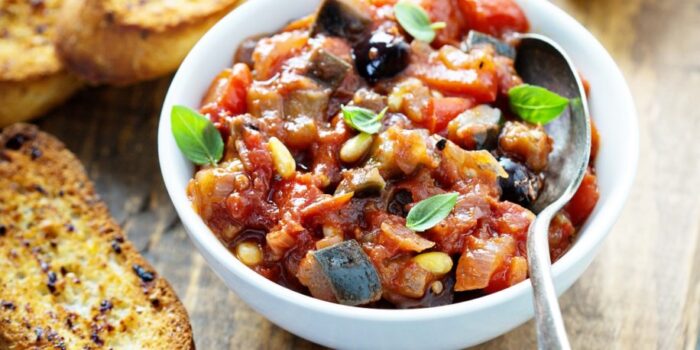
Caponata is the highlight of Sicilian cuisine. This sweet-and-sour stewed vegetable dish comes in a thousand and one variations, with aubergine as the common denominator. It is taken to great heights by first frying it at a high temperature. The rich and full flavour of caponata is at its best the day after. We like to eat it at room temperature with a generous piece of toasted bread.

How to make caponata
1. Spread the aubergine out in a colander, sprinkle with the salt and leave to drain for approx. 30 minutes. Rinse the aubergine and pat thoroughly dry with kitchen paper. Heat the oil in a heavy-based pan to 175 °C. Fry the aubergine in batches until golden brown and cooked through.
2. Meanwhile, bring a pan of plenty of water to the boil. Cut a cross into the rounded side of the tomatoes and immerse them in the boiling water for approx. 10 seconds. Remove the tomatoes from the pan with a slotted spoon and plunge them into cold running water. Remove the skins and cut into approx. 2-centimetre cubes.
3. Heat the olive oil in a frying pan over medium heat. Fry the red onion, anchovies, celery and chilli flakes for approx. 5 minutes. Add the diced tomatoes and fry everything for another approx. 5 minutes. Add the capers, olives, sugar, red wine vinegar and passata (tomato sauce made from fresh, ripe tomatoes that are first cooked and then strained) and bring to the boil. Finally, add the aubergine. Turn the heat down low and stew the vegetables with the lid on the pan for approx. 1 hour. Allow the caponata to cool completely and season with additional salt if necessary.
4. Divide the caponata between 4 bowls and garnish with the mint and almonds. Divide the anchovies and hard-boiled eggs over the top and serve with the toasted bread.
Tip: just like shakshuka
Sicilians generally eat caponata as a starter, but it is easy to turn it into a main course. Make a delicious pasta dish with it, stew eggs in it as you would with shakshuka or stir the caponata through risotto. The possibilities are endless, so it might be a good idea to make a double batch straight away.
Wine tip for caponata
Do you find it difficult to choose a wine to go with your dish? Then always remember this rule: ‘what grows together, goes together.’ In other words: dishes from a particular region pair very well with wines from the same area. No wonder, then, that caponata and the typical island wine Nero d’Avola make a magical combination.
Also read:


