



Everything about caviar
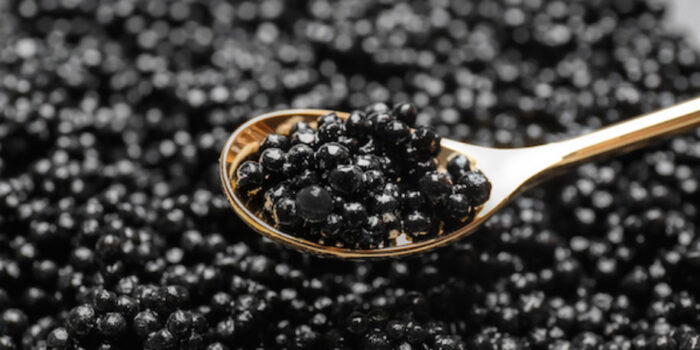
You’ve probably eaten small, red-orange fish eggs before. But the real, black eggs of the sturgeon? Chances are you haven’t. Caviar is pretty exclusive, after all. In case you’re secretly curious about it: we’ve listed everything you want to know about this ‘black gold’ for you.

What exactly is it?
When you talk about caviar, you’re talking about fish eggs. Although not all fish eggs can simply be called caviar. Only the (unfertilized) eggs of the sturgeon are called that. The rarer the sturgeon, the more exclusive the caviar and the higher the price. Although the average price of the black eggs is already pretty high regardless: for 25 grams, you’ll quickly pay well over a hundred euros. There’s a reason for that: most sturgeon species are threatened with extinction. That’s why wild caviar has been banned for several years now, and it can only be farmed. That’s not exactly easy.
So how do they do it?
Generally speaking, sturgeons are born in basins and then, once they’ve grown a little, released into large lakes. They swim around there for quite some time. It takes three years just for breeders to be able to determine which fish are male and female, and then at least another five years before the female sturgeons are mature and begin developing eggs. Only then are the fish killed and cut open. If you’re wondering how many eggs come from a single fish: tens of thousands. In fact, a 300-kilo sturgeon can sometimes produce as much as 45 kilos of caviar.
What happens next?
After the eggs have been removed from the sturgeon, they are washed, sieved, sorted by size and salted at lightning speed. Salting is necessary to slow down the ripening process. The better the quality of the caviar, the less salt is added. If you spot the word malossol (Russian for ‘little salt’) on a jar, you know you’re dealing with the very highest quality.
How many types of caviar are there?
Lots. There are quite a few different types of sturgeon, after all. There are freshwater and saltwater sturgeons, very large and somewhat smaller ones, rare and less unique species, and the list goes on. All those types of sturgeon each have their own distinctive caviar, in terms of flavor, size, color and texture. We’ve listed the five most popular ones for you.
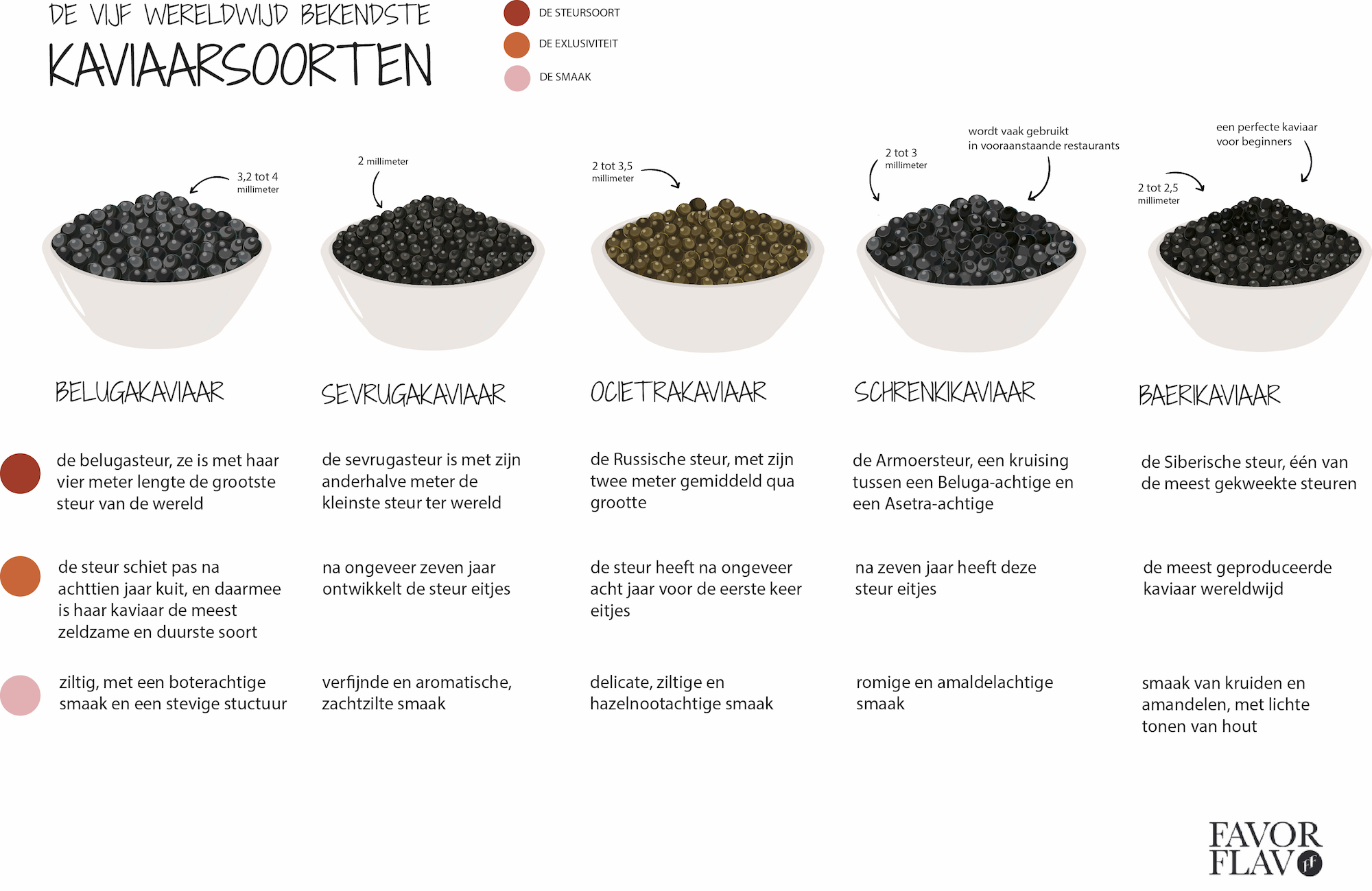
On your laptop? Click on the infographic for a larger version.
Besides real caviar, there is also imitation caviar. These are orange or red eggs from, for example, salmon, trout, cod or herring. You’ll particularly come across salmon roe in or on your sushi. Although it could also simply be cheap gray lumpfish roe that has been sprayed orange. The fish roe is considerably smaller, cheaper and less intense in flavor.
How do you eat caviar?
Usually as an appetizer or intermediate course, preferably as pure as possible. No fuss, in other words. If you really want to do it properly, use a small spoon (one made of glass or mother-of-pearl; metal spoons affect the flavor) to place a little on the back of your clenched hand. Lick it off and press the eggs against your palate with your tongue, so they pop one by one. You may wash it down with champagne, but preferably not immediately. Always wait a moment. And do you want to check whether the caviar is really fresh? Smell your hand after eating it: it shouldn’t smell of fish, but should remain completely odorless.
Read also:


