



Give Me Another Oyster #3
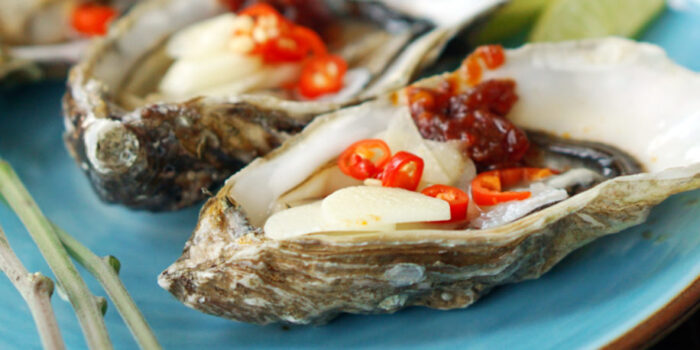
The oyster season has opened again, which means: time for an oyster. Especially now that fish shops are multiplying faster than rabbits and they all have the iodine-rich shellfish on the menu. But which oyster should we choose? The flat one or the round one? Oyster expert Marcus van den Noord of Zilt & Zalig shares his expertise on ‘the tear of the sea’.

Part 3: The French Creuse.
Strictly speaking, this is not a category in its own right, but we’ll nevertheless discuss this French oyster separately. Because it is often served in the Netherlands. And because, unlike the other Creuses, it is classified not only by numbers but also by quality categories.
This Creuse may be named after its region of origin, its farmer or its cultivation method. In France, it is cultivated in places including Normandy, Brittany, Marennes D’Oléron and the Mediterranean Sea.
Wilde
They are simply cleaned and then traded immediately.
Fines de Claires
They have received a little care and supervision. Marcus: “The quality varies. If Fines de Claires are on the menu in a restaurant, ask for the name. Name unknown? Don’t order them.”
Speciales de Claires
Months of care and supervision at provincial level. There is a great deal of secrecy surrounding production. This determines the quality of the oyster, and it is how the farmers distinguish themselves from one another. The Gillardeau is famous.
Pousses en Claires
The highest level of quality and supervision. These oysters must be completely sustainable and organic. Label Rouge.
Super Speciales
The absolute highest quality French Creuse.
Also read:
- These are the most important lessons I learned while working in professional kitchens
- Waitstaff reveal: these are the craziest orders ever
- The bubble is about to burst: France’s champagne problem


