



Tips for the ultimate bolognese
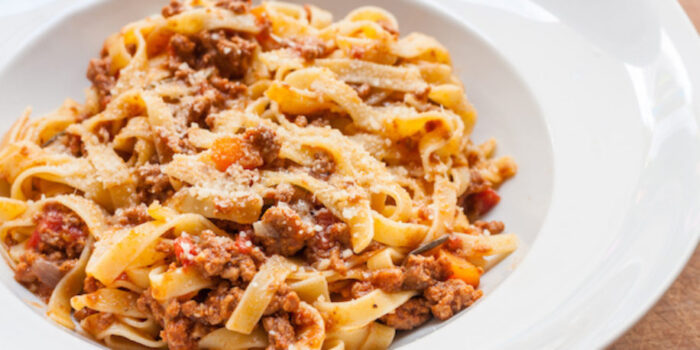
The quick spaghetti bolognese you eat in the Netherlands isn’t the same as the ragú alla bolognese you taste on holiday in Italy. It doesn’t even look like it. The classic bolognese from Bologna, northern Italy, isn’t a tomato sauce with spaghetti but a meat ragù with wide ribbons of pasta. With these tips, you can make it yourself.

7 tips for the ultimate bolognese
1. Choose tagliatelle
You never serve ragù alla bolognese with spaghetti. Italians choose tagliatelle (preferably 8 millimetres thick), but we also approve of pappardelle and fettucini—two other wider pasta ribbons. The most important thing is that the sauce stays stuck to the pasta, and it does that less well with thin spaghetti strands.
2. Add milk to the wine
Which wine should you choose? Preferably a dry white, because that’s how it’s supposed to be. Although in some parts of Italy, red wine is fine too. Red or white, the base of the ragù consists not only of a good glass of wine, but also a generous splash of milk. Don’t worry: you won’t taste it in the sauce. The milk mainly counteracts the sour taste of the alcohol.
3. Don’t: use garlic
No, real bolognese contains no garlic. Italians find the flavour too strong and dominant. Instead, they prefer to flavour their ragù with marrow. Leave out other herbs you might like to stir in too—think oregano, basil and parsley. Not necessary. Just pepper, salt and nutmeg.
4. Buy ground beef and pancetta
Italians prefer making ragù with ground beef, because the flavour comes through just a little better. Always use meat with a somewhat higher fat percentage (at least fifteen per cent). The sauce should be deliciously fatty too. Also, don’t choose cheap lardons from the supermarket, but a nice piece of pancetta, Italian cured pork belly. It gives the sauce a unique flavour.
5. Leave out the mushrooms
The original recipe contains no mushrooms. Also not done: courgette and bell pepper. In ragù alla bolognese, the emphasis is really on the meat. The basic soffritto contains only celery, carrot and onion.
6. Let it simmer for a good long while
A ragù really needs a few hours to develop its flavour and reduce into a good, silky meat sauce. It’s an absolute must to let it simmer over low heat for a few hours. In short: making a real bolognese ragù quickly is actually impossible.
7. Get started
Now that you have all the wisdom you need, it’s time to go shopping and start cooking. We always use this recipe from Serious Eats, because it follows the rules to the letter and is damn delicious. Buon appetito!
Also read:
- Eat pasta like a true Italian
- Vjeze’s pasta with things that don’t seem to add up
- The mayor of Bologna is angry


