



10 tips for picky-eating children

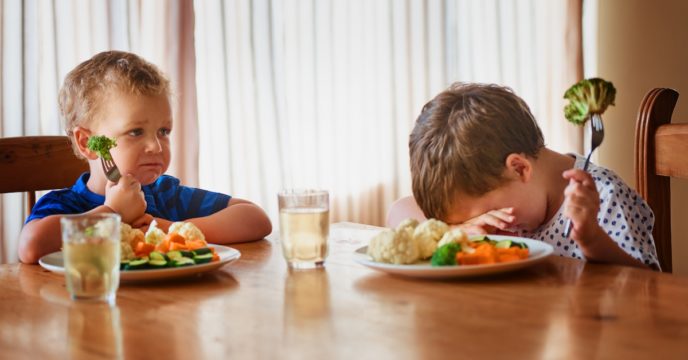
With no parenting experience whatsoever (even my cats don’t listen to me), I’m amazed by stories from parents struggling with children who only want to eat cocktail sausages, white bread without crusts and slices of cucumber, while on the other hand I’m astonished by children who happily stuff olives, squid and blue cheese into their mouths at a young age. How do you get those picky little whiners to eat? This dietitian offers ten interesting tips. At least: they don’t work with the cats, but they might with your picky children.

Just blend it into a smoothie
Just put it in the blender with some mango or banana, press that button and you’ll see: the healthy vegetables go down like clockwork. Or not? Leah Hackney is a dietitian specializing in children who really eat nothing. ‘Children can actually become extra suspicious of that,’ she says. ‘So if you secretly hide vegetables in the sauce, a smoothie or a muffin, there’s a chance they’ll become even fussier eaters. Involve them: ask if they’d like to press the blender button. Then they’ll probably become curious about what that new drink tastes like.’
Serve a plate of nothing but vegetables—they’ll have to eat them
A child who doesn’t like vegetables? Just give them a big plate with all kinds of vegetables, and eventually they’re bound to choose something they want to try. ‘Wrong,’ says Hackney. ‘A large amount of vegetables can make them panic. And if you combine foods they don’t like with things they do like, you’re more likely to get them to try a bite.’
So, what do you feel like eating?
Ask your children what they want to eat, so they get to choose for themselves. No more whining! Yet Hackney isn’t a fan of this approach. ‘There’s a good chance your children will choose something you won’t be happy about. They’ll never choose something they’ve never tried before. So ask: would you like a banana or an apple? Give them a limited choice, and you’ll avoid a war at the dinner table.’
You’ve already tasted that—you don’t like it
Your child doesn’t like tomatoes. Because last week he had a piece of tomato in his mouth and his face turned into a dried prune. ‘Even so, you should let them try it again,’ Hackney advises. ‘Your child takes a bite once, refuses it the next time, then tries it with a lick, leaves it untouched another time, but after about twenty attempts there’s a chance the little one will have got used to it. Give it some time.’
Don’t give a baby fruit as their first taste, or they won’t learn to eat vegetables
That’s a myth, according to Hackney. Fruit purées supposedly turn your child into a sweet tooth who will never want a Brussels sprout or green bean anywhere near them again. But that isn’t true. ‘Young children can learn to eat all flavors, so you can offer fruit as often and in as many ways as you like. Breakfast, lunch, dinner—it doesn’t matter. And the same applies to vegetables.’
Finish your plate first, then you’ll get dessert
As a reward for that plate of endive mash, you get a bowl of custard; only once you’ve eaten all the peas do you get a Danoontje. Everyone does that, right? Not sensible, says Hackney. ‘You run the risk of children overeating just to get that delicious dessert. Give them the dessert anyway, and you’ll no longer have arguments about the food.’
Finish your vegetables first, then you can have another slice of baguette
Junior tastes bell pepper and says: yuck! You say: eat your vegetables first, then you can have more pasta. Not very clever from a parenting perspective, according to Hackney. ‘Don’t put any stress on it; just say: it doesn’t matter, you still have to learn to eat this. That actually makes it easier for children to try it again.’
Another cookie?
If you let your children do as they please, they’ll finish an entire bag of English licorice, and when it’s time for salad, their stomachs are already full. Hackney has a tip: offer both a few chips and some healthy food. ‘That way, children learn what a healthy and balanced eating pattern is. And a cookie now and then is simply part of that. If you deny them it, a kind of sugar obsession can develop instead—fuel for arguments at the dinner table.’
Yuck, I don’t like that!
When your child eats something for the first time, the first reaction may be: yuck. What do you say then? Just try it, you’ll probably like it? Hackney: ‘Ask your child: how would you like this to taste better? Then they’ll probably become more curious about trying another bite.’
Creamed spinach goes flying across the room
What should you do when the fish fingers go flying and the creamed spinach is smeared all over the table? The dietitian doesn’t allow strong swearing, but she has other tips: ‘Ignore the behavior, put a small bowl next to the plate where your child can put the food they don’t want to eat, and calmly say: “The food belongs on your plate.”’ You can also make the portions smaller (which will save you mopping later, or cleaning up after a vomiting dog), and perhaps it’s a sign that the little one has eaten enough?
On Leah Hackney’s Instagram account you’ll find even more tips, with clear infographics. She also immediately tackles old wives’ tales such as the idea that baby food doesn’t really matter yet (‘Food before 1 is just for fun’) and that sweets ruin a healthy palate. And even if her tips don’t help, it may be some consolation to think that, judging by her thousands of followers, there are many more parents around the world begging on their knees for their eighteen-month-old little sprout to please try the tiniest bite of pumpkin. To no avail.
Also read:
- Recipe: deep-fried Brussels sprouts—does this still count as a vegetable?
- These children’s reviews are more critical than those of many a food critic
- Mother makes edible works of art so her son empties his plate


