


10x vegetables and fruits you shouldn’t store next to each other
You’ve probably heard that if you want an avocado to ripen faster, you should lock it in a bag together with a banana. Both fruits produce ethylene, a gas that accelerates ripening. And there are more types of fruit that release quite a lot of ethylene, but there are also crops that are very sensitive to it. So if you’ve ever wondered why your cauliflower develops sad yellow spots soon after you buy it and its leaves start to droop, read on.

There are several vegetables that are especially sensitive to the ripening gas ethylene, also known as ethene. It’s a good idea not to store these near fruits that release a lot of it, in order to prevent them from spoiling more quickly. Health platform Eat This writes this based on data from a study by the University of California, and these are lists of 5 ethylene emitters and 5 foods that are particularly sensitive to it. So keep them well apart…
Foods that produce ethylene
1. Apples
It’s best to store apples in a separate bowl, a little way away from other fruits and vegetables.
2. Avocados
Avocados don’t ripen on the plant, but only after they’ve been picked, according to Eat This. That doesn’t make the myth of the ready-to-eat avocado from the supermarket any less frustrating, but here are some more tips for ripening your avocado faster.
3. Bananas
With bananas, the ethylene is released from the place where they’re attached to one another in a bunch. That’s why you sometimes see plastic wrapped around that spot, to contain the emissions and control the ripening rate.
4. Galia melon
The strange thing is that Galia melons (with green flesh) release quite a lot of ethylene, while cantaloupes (with soft orange flesh) are particularly sensitive to it, according to Eat This. So don’t store them together.
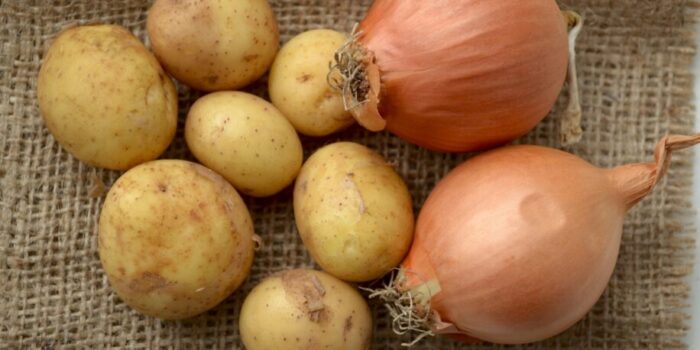
5. Potatoes
Not a fruit, and not really considered a vegetable in the Netherlands, but still something we love: the potato. They release less ethylene than the fruits mentioned above, but it’s advisable to store them separately in the pantry. And not together with onions! Even though that probably happens regularly. But take a look below and you’ll see that onions are on the list of crops that are particularly sensitive to ethylene:
These foods are particularly sensitive to exposure to ethylene
1. Onions
You just read it. You can generally store onions for just as long as potatoes, which is why people often put them together. But the ethylene released by a potato can make onions sprout and develop mold.
2. Pumpkin
A pumpkin may seem almost impervious thanks to its hard skin. But the inside is actually very sensitive to ethylene, so don’t store this delicacy in a basket or container together with potatoes either.
3. Cauliflower and broccoli
These delicious vegetables (and Brussels sprouts too!) can turn yellow and lose their firmness when stored with the fruits (and potato) from the list above. Although they aren’t kept refrigerated in the supermarket, it’s advisable to do so at home—and not unwrapped in the crisper drawer with the items from the list above.
4. Cucumber
They may be best friends in a Greek salad, but before making one, don’t store cucumbers and tomatoes together. Tomatoes are also ethylene emitters, and cucumbers don’t respond well to that. They too will turn yellow and spoil more quickly when stored near products from the list above (and near tomatoes).
5. Carrots
Carrots can become bitter when exposed to ethylene. What a waste! A fresh, crunchy carrot is, however ‘old-fashioned’ it may be, still a great snack. And an ideal vehicle for, for example, homemade hummus!
Read also:
- This is why hardly anyone eats the leaves of a tomato plant
- Eddie’s food frustrations: products that go from ripe to rotten in 1 second
- Why San Marzano tomatoes are the fake Rolex of canned tomatoes
Source: Eat This


