



5 food items accidentally invented that we can’t live without
Admittedly, we weren’t there ourselves, and there’s no historical evidence for all of these. But it remains incredibly amusing to read that some things in the food world may have been invented entirely by accident! These items, for example:

But first, imagine living in a world without loaded nachos. Or (for some people, like FavorFlav’s Sabina, this really hurts) without Chipitos. Well, that could easily have been reality if these rather coincidental events had never happened…
Tarte Tatin
It’s clear that there were two Tatin sisters, Caroline and Stéphanie, who had a hotel called Hôtel Tatin, and that the delicious upside-down apple pie was named after them. Exactly how it was invented isn’t known. One version of the story is that Stéphanie once (slightly overstressed) wanted to make a different apple pie and let the pan with apples, butter and sugar burn a little. She quickly threw a sheet of pastry on top as a lid so it wouldn’t burn any further in the oven, then baked the pastry. Afterwards, she turned it out onto a plate and quelle surprise; the guests loved it! It seems the ladies never specifically wanted to create a signature dish; they didn’t publish the recipe, and on their own menu they apparently never called it tarte Tatin, but probably simply tarte solognote – after the Sologne region where their hotel was located. Once the pie was recreated at the Parisian restaurant Chez Maxime, it became an instant hit. In any case, it’s delicious, and here’s how to make your own tarte tatin!
Nachos
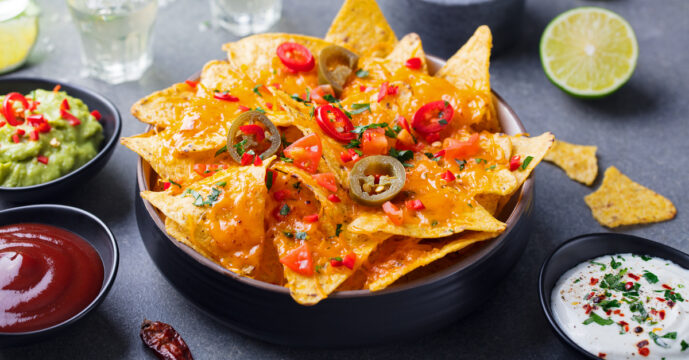
If a group of Texan friends hadn’t crossed the border in 1940 on a day trip to Piedras Negras, Mexico, gotten hungry, and happened upon a highly inventive kitchen employee, who knows whether we would be able to enjoy the ultimate comfort snack (or meal, that works too) that loaded nachos are today… When they arrived at the Victory Club restaurant, they asked for something to snack on, but the chef had just stepped out! (If you’ve ever worked in hospitality, you know that a little commotion is about to break out in the kitchen.) The person who was there was kitchen employee Ignacio Anya Garcia, nicknamed Nacho. A quick scan of the kitchen turned up fresh tortillas, cheese and pickled jalapeños. He cut the tortillas into triangles, fried them, smothered them in melted cheese, sprinkled the pickled jalapeños over them and served the result to the ladies. “And what’s it called?” one of them asked… “Nacho’s Special,” Ignacio replied, and goodness, how deeply grateful we still are to you.
Roquefort
We can’t find any hard historical evidence for it, but legend has it that a shepherd in the French area of Roquefort-sur-Soulzon left his bread and cheese in a cave where he had been eating after becoming distracted. When he returned to the cave months later, he found his piece of cheese again, moldy and all. And it’s thanks to the brave souls who dared to taste that piece of cheese and enjoyed it so enthusiastically that they deliberately began letting their cheeses develop mold; they’re the reason our cheese boards are now so wonderfully balanced.
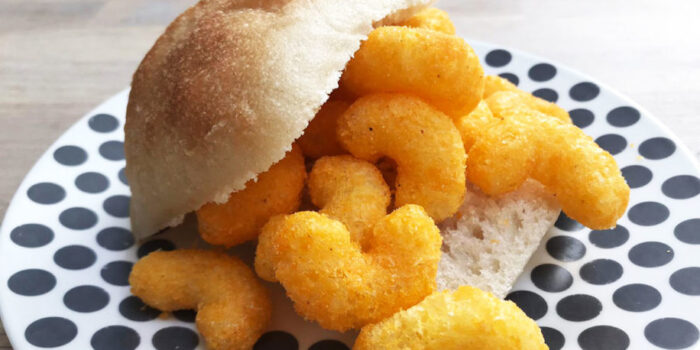
Chipitos
One origin story concerns Edward Wilson, who worked for a company in Wisconsin in the 1930s that produced (partly) cooked animal feed. He noticed that a machine was producing puffed puréed corn in a sort of string-like form, and began experimenting with it. Add spices, taste, apply for a few patents, and eventually, around the 1940s, the company Flakall brought these Korn Kurls to the consumer market. Around the same time, another American company released a similar product called CheeWees. Could they ever have imagined that these little chips would become such a hit that there would even be Chipito-scented nail polish?! A disgustingly delicious reader tip: Chipito sandwich!
Worcestershire Sauce
The little bottle with what is more or less the hardest name in the Western language to pronounce. We recently wondered on Instagram whether anyone has ever lived long enough to need to buy a second bottle of it? (Me! I love it!). How did it all begin? British chemists John Wheeley Lea and William Henry Perrins brewed this fermented liquid seasoning at the request of a former governor who had encountered something similar in India. At least, that’s the story told by the company Lea & Perrins, commercialized in 1837, about its origins. Not much is known about who came up with it or what was in the original recipe, but apparently the two gentlemen found their first brew so disgusting that the barrel was banished to the cellar. When it resurfaced during a clean-up years later, they decided to taste it again—and what do you know? The long-fermented concoction had become milder in flavor and perfectly usable. Orange label on the bottle, and the rest is history… Incidentally, during the Roman Empire, people were already writing about a fermented seasoning based on anchovies (as Worcestershire Sauce is too), called garum.
Read also:
- These 9 things you need to know about espresso
- This is how to stock your Mexican pantry
- Classic: Caesar salad. But what’s the authentic way to make it?


