



5 mistakes to avoid if you really want delicious Brussels sprouts
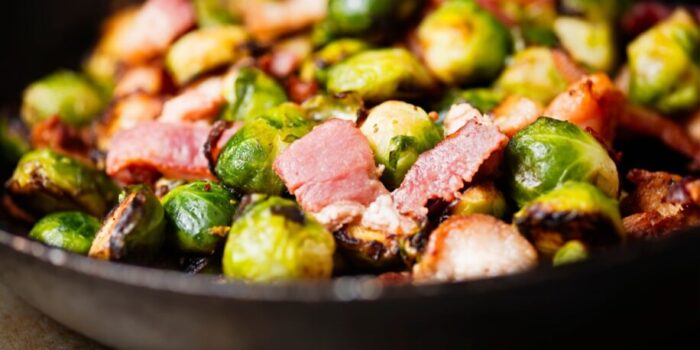
Do you already know how much we love Brussels sprouts, and how much we want the whole of the Netherlands to get on board with them? Because they’re healthy, beautiful (those little cabbages on a stalk—gorgeous, right?) and absolutely indispensable on the classic Christmas table. But they’re also not to be underestimated for the rest of winter! Especially if you know how to avoid these mistakes when preparing them…

Because crispy, perfectly cooked Brussels sprouts: excellent. Deep-fried Brussels sprouts: absolutely excellent! Nearly mushy, greyish-yellow balls of sludge from a large pan of foul-smelling cooking water: disgusting. So avoid the following mistakes and you’ll soon be enjoying incredibly delicious Brussels sprouts:
Mistake 1: That large pan of foul-smelling cooking water
I don’t think I’ve ever enjoyed Brussels sprouts that were simply cooked in a pan of water. They have a fairly intense flavor, so to balance that out and avoid ending up with nothing but a bitter, smelly heap, you really need to counter it with fat and heat (so, a different kind of heat than boiling water).
Roasting them in the oven is truly excellent, but that doesn’t mean you can’t cook them in a pan on the stove. But you really do need fat (and time) for that. One of our cousins prepares them halved in a frying pan with bacon bits, a finely chopped onion, a chopped red chili and oil, and lets them cook very gently over low heat—at least half an hour. The delicious fat slowly seeps into those green little cabbages: scrumptious.
Mistake 2: The oven temperature is too low
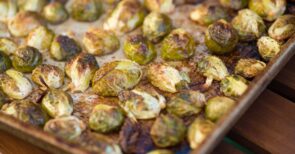
Roasting them in the oven may well be the best method for delicious Brussels sprouts. It gives you crispy edges and, if you’re lucky, little chips in the shape of the loose outer leaves on the baking sheet. And who wouldn’t want that! But it’s very important not to set the oven temperature too low, because then they’ll just steam gently until done, while what you’re really after is that golden-brown crispiness. 200° C is good, 220° C is even better. Just keep an eye on them.
Mistake 3: Using too little oil
If you use too little oil with the oven method, you’ll still end up with softly cooked Brussels sprouts. Every sprout (or half sprout) needs to be coated in oil; use two tablespoons of oil per pound of trimmed Brussels sprouts. I simply do this in a mixing bowl with my hands, then grate a clove of garlic over it using a Microplane, sprinkle everything with Maldon salt and white pepper, and toss it all thoroughly by shaking the bowl. Sounds good, doesn’t it?
While I’m working on the Brussels sprouts, I let the baking sheet preheat in the oven so some searing action starts immediately as soon as the sprouts land on it. If the sprouts are cut in half, take a moment to place them cut-side down so that surface caramelizes nicely.
Mistake 4: Throwing away the loose leaves
Don’t! What a waste. If you remove the toughest part of the bottom with a small knife, the outer leaves often come loose. Don’t throw them away—just include them in the preparation. In the oven, these leaves become crispy like little chips, although you’ll probably need to remove them from the baking sheet partway through so they don’t burn completely before the other sprouts are cooked.
I pick them off the sheet halfway through with my indispensable kitchen tongs, place them on a plate and return the sheet to the oven. Those ‘chips’ are my cooking snack. You know: what you eat right before you eat.
Mistake 5: Forgetting the bacon
No, of course you can also make incredibly delicious Brussels sprouts if you don’t eat animals. But if you do eat bacon, this really is a golden combination. The salty bite of bacon with the crispy, fragrant Brussels sprouts—irresistible. Prefer plant-based? Give those sprouts a boost with some fried mushrooms, deglazed with a splash of balsamic vinegar, and sprinkle with nutritional yeast flakes. Umami kick at its finest!
Read also:
- Why Neanderthals didn’t like chicory (and neither do you)
- Is raw vegetables healthier than cooked vegetables?
- How to prepare vegetables like a chef


