


5 surprisingly (un)healthy products
If you cherish the illusion that a frikandel speciaal might be even the tiniest bit healthy for you, then maybe you’re just being a little clueless, right? You also know perfectly well that walking a few metres farther to the supermarket and buying a bag of carrots there is the healthier choice. But with some things, it’s not at all obvious whether they’re healthy or not… and that’s pretty annoying.

Because, let’s be honest: sometimes you’re fooled by the marketing people behind supermarket products (for example, Nicolette van Dam’s vegetable sweets were recently nominated for most misleading food product), but sometimes it’s simply quite puzzling why something seemingly innocent turns out not to be so good for you after all. The only thing that helps then is comparing labels very carefully and gathering information in other ways. The clever people at popular science magazine and platform Quest have already listed a few things that are surprisingly (un)healthier than you might think:
Green olives
So I once read the label on a jar of olives and thought, ‘That’s hardly any calories, I’ll just eat the whole jar.’ Tunnel vision, apparently. Green olives contain almost four times as much salt as plain crisps, with some varieties containing as much as 4 grams per 100 grams! So they’re bad for your blood pressure and kidneys if you eat too many. There’s also an increased risk of cardiovascular disease and stroke, and according to the Dutch Heart Foundation, that starts at 5 grams more than the ‘responsible’ 6 grams per day. Good grief, another illusion shattered…
Fruit juice
Did you think you were doing the right thing by leaving cola alone and knocking back a glass of fruit juice instead? Think again… Fruit juices generally contain just as much sugar as regular cola—around 10 grams of sugar per 100 millilitres. And a normal glass easily contains 200 ml, so do the maths on how little you’ve gained. Is it actually the vitamins that make you reach for a bottle of fruit juice? Just eat a piece of fruit instead; then you really are making a healthier choice.
Currant buns
This made me raise my eyebrows very high, but do you know what apparently is better for you than a standard currant bun? A slice of cake! I never had the illusion that a supermarket currant bun was healthy or anything—I mean, the smell that hits you when you open a bag like that (not a fan, as you can tell)… But I found this very surprising. Currant buns contain 32 grams of sugar per 100 grams, while cake contains 26 grams. We do have to be honest about the unhealthy fats in cake too, though: there are more of them than in currant buns. What would you choose?
Cheese
Now you probably want to cover your ears (or actually your eyes) and sing very loudly, ‘I can’t hear you! I can’t hear you!’ Because there are so incredibly many cheese lovers in this country, and so much incredibly good cheese for sale here, that we’d rather not know about cheese’s supposedly unhealthy properties. But yes. There are experts who say you can’t eat as much cheese throughout the day as you’d like because of the saturated fats it contains.
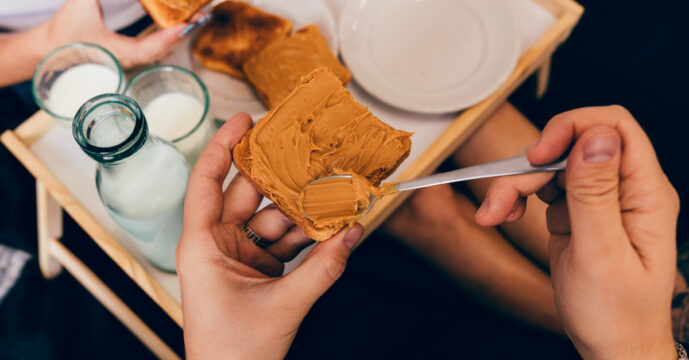
So stick to modest portions, and make them really delicious cheese. And there’s optimistic news: research is also being conducted that meanwhile suggests full-fat yoghurt and cheese may not be so bad for you after all! And do you know what is definitely a (perhaps surprising) healthy choice? Peanut butter. Yes, it’s fatty too, but at least those fats are mainly unsaturated fats.
Cruesli
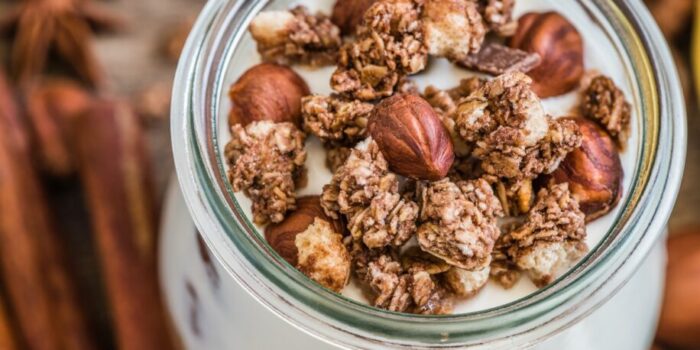
And to end with the real shocker: according to Quest, you’re better off eating a Liège waffle than yoghurt with cruesli! Hooray! (Not a fan of cruesli either…) Per 100 grams, both come in at around 470 calories (depending on which type of cruesli you choose). But I have to be honest: there are few scenarios in which I see a Liège waffle as ‘healthy’ for me. Except perhaps for your enjoyment of life!
Read also:
- You’re better off having pizza for breakfast than cruesli
- 6 supposedly unhealthy foods that are actually perfectly fine
- ‘City Deal’ signed for a healthier food environment
Source: Quest


