


7 traditional Iftar dishes from around the world
Ramadan is in full swing. That means that people are fasting all over the world, but it also means that all kinds of wonderful dishes are served after sunset. We’ve listed seven traditional Iftar dishes that are worth trying for yourself. Whether that’s for Iftar or simply because you feel like it.

Güllac
Güllac is a Turkish dessert made with milk and pomegranate. Some consider Güllac the little brother of baklava, because of the thin layers of dough and nuts between the layers. Güllac layers are made from cornstarch and wheat. The layers are soaked in milk and stacked with walnuts in between.
Samosas
You know them: those crispy triangles that resemble spring rolls. They are particularly popular in Saudi Arabia and Pakistan. They’re the perfect little snack to eat after fasting, filled with chicken, cheese or vegetables.
Bandung
This sweet drink is hugely popular in Malaysia, not only during Iftar but also on other festive occasions such as weddings. Originally, this drink is made with condensed milk and rose syrup, resulting in a beautiful pink colour.
Kolak
In Indonesia, people eat a dessert called kolak. It is made with palm sugar or coconut sugar, coconut milk and pandan leaves. There are many variations, too, with ingredients such as jackfruit, sweet potatoes and cassava, but all the sauces are made with coconut milk and sugar.
Harees
In the United Arab Emirates, harees is a daily tradition during Iftar. It is an old and incredibly popular dish. It has a pudding-like texture and is made with wheat, butter and meat.
Shorbet Adas
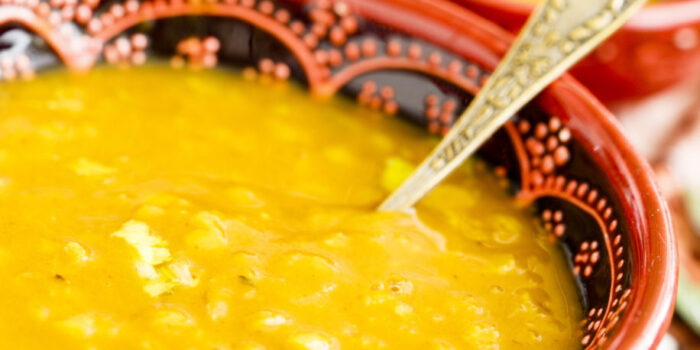
This is mainly eaten in Iraq, almost daily. It is a red lentil soup that is sometimes also made with meatballs, carrot and vermicelli.
Mansaf
Mansaf is a dish from Jordan that is often served on a very large platter for the whole family to eat from. It is made with rice and chicken or lamb. The meat is cooked in dried yoghurt. A large, thin Arabic flatbread is placed on the platter first, followed by the rice and meat, and it is then covered with toasted almonds and pine nuts.
And of course, no well-stocked table would be complete without dates and baklava!
Read also:


