


8 of the hottest flavor boosters from the Asian grocery store

Hot, hotter, hottest: if the flames are already shooting out when you take a small bite of sambal, then dare to try these hot sauces from the Asian grocery store.

Chili paste
The label says: chili paste with soya bean oil, along with lots of mysterious Thai characters. This is Thai chili paste, extra hot. Use it mixed with soy sauce as a dip for pieces of cucumber or celery, or add a spoonful to tom yum goong soup.
Curry paste
Spice paste for making Thai curry. Available in jars and plastic containers, as well as in sachets for one meal. Depending on the brand, the paste can be as thick as wall filler or thinner, like jam. Yellow curry is generally somewhat milder and contains fewer chili peppers and less oil. Green curry is made from green chili peppers and has a fresh, sharp flavor and aroma. Red curry falls somewhere between green and yellow curry, but the spiciness depends heavily on the brand, so use it sparingly.
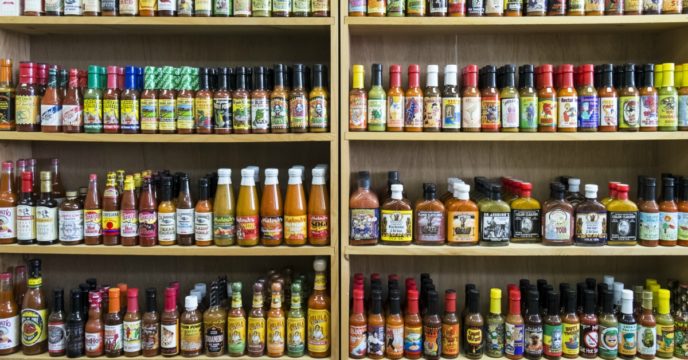
Sriracha
Also Thai. There, it is sometimes served with fries like ketchup, but don’t be fooled, because sriracha is scorching hot. Traditionally, sriracha is served with fish and shrimp, but you’ll also find this flamethrower on hamburgers and with fried eggs. Prefer something a little milder? Make sriracha mayonnaise and serve it at the barbecue.
Lingham’s hot sauce
Tricky: an English name, simple label. Ingredients: chili pepper, sugar, salt and vinegar. Pay attention to the color around the neck of the bottle: yellow is still mild, blue contains ginger and garlic in addition to chili (delicious!), and dark red is the extra-hot version. And extra hot really means it here: flames shooting through the roof.
Sambal oelek, sambal badjak, sambal manis
Dozens of different varieties. The best known are sambal oelek, sambal badjak and sambal manis. Sambal oelek is the brown bread of sambal: plain and simple, made with an ulek, a kind of pestle—hence the name. Sambal badjak is a little more spiced, sambal badjak trassi is made with shrimp paste, and sambal manis is slightly sweet. A sambal lover? Make it yourself sometime—a fun project, and fresh sambal has more flavor than sambal from a jar. Don’t rub your eyes!
Sambal peteh
Love it or hate it—there is no middle ground with this special Indonesian sambal, made with peteh beans. These peteh beans are also called stink beans. The sambal’s aroma makes itself known twice: once when the dish is served, and a second time when you sweat or urinate, because the beans’ penetrating smell leaves no corner of your body alone. Fortunately, according to Indonesian tradition, the beans are extremely healthy. Fans eat it like regular sambal, only better: a little with nasi, as a dip with spring rolls or, very Dutch, on a slice of bread with aged cheese.
Surinamese sambal
Regular sambal is made with Spanish peppers or bird’s eye chilies, but in Suriname they use the blisteringly hot Madame Jeanette peppers. This pepper is therefore considerably hotter than Indonesian sambal. Essential in peanut soup, on a moksi meti sandwich or with pom. Look for brands such as Lekker Bekkie or jars that look homemade.
Harissa
Tunisian red hot sauce. Sold in jars, cans or tubes. Naturally, it contains roasted Spanish pepper, but also tomato, cumin, coriander and garlic. Sometimes rose water or rose petals are added. In North African countries, it is used as a flavor booster for just about everything: in sausages, stews, as a marinade for meat or eggplant, and in chickpea soup. Very fiery, and a favorite of Ottolenghi.
Also read:


