



About palm oil: what is it and why do we still find it in so many products?
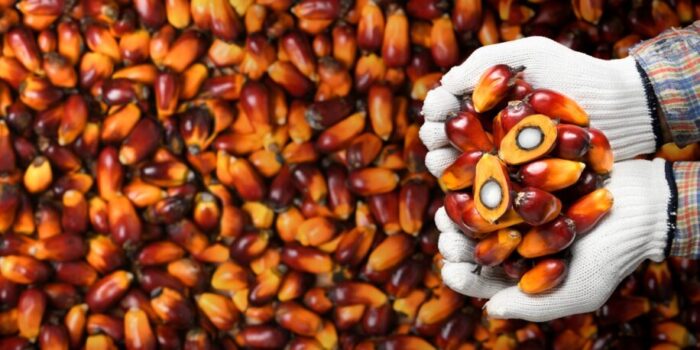
What do your jar of chocolate spread, packet of margarine and bottle of shampoo have in common? Yes, you probably use them every day. But they also all contain palm oil. Unfortunately. Why is there ‘unfortunately’ palm oil in so many products? And what actually is palm oil?

Palm oil isn’t added to all those products for no reason. It has a purpose. For example, it makes chocolate beautifully glossy, just like your hair. And your peanut butter? It only becomes a nice, compact spread when it contains palm oil. Otherwise, a layer of oil forms on top (and that doesn’t make everyone happy). An added benefit is that palm oil is suitable for a great many products. It has a completely neutral smell, color and taste.
Palm oil: cheap product
Palm oil is popular with many manufacturers. Not only because it makes their products look and taste better, but also because it’s so cheap to obtain. Palm oil is extracted from the oil palm fruit: a fruit that requires little land and few pesticides to grow. It is grown in countries such as Malaysia and Indonesia. Wages and land prices there are also extremely low, making it even more cheap to obtain large quantities of palm oil.
So far, so good you might think. But palm oil shouldn’t be so popular at all. It isn’t healthy for us, and it isn’t good for nature either.
Saturated fat
Palm oil is a vegetable fat. But don’t be misled by the word ‘vegetable’. Even though you may have positive associations with it, palm oil really isn’t healthy. It contains a lot of saturated fats – far more than other types of oil – and these are known to increase the risk of cardiovascular disease.
Loss of biodiversity
Another very important reason why we’d be better off banning palm oil: it doesn’t do much good for nature. Huge areas of rainforest are cleared to create oil palm plantations. The consequences? Loss of biodiversity. People who are forced to move. In short, a list of consequences that doesn’t exactly make us cheerful.
Alternatives?
Palm oil is currently used extensively. Just turn over your packaging and read the label. There’s a good chance you’ll see palm oil or palm fat on the ingredients list. It may even be listed without you immediately recognizing it, because palm oil has many other names too. Names that don’t even contain ‘palm’ or ‘oil’, such as cocoa butter equivalent (CBE). With more than 200 different names for palm oil, it’s no wonder you don’t realize you’re holding a product containing palm oil.
The unfortunate thing is that there aren’t many good alternatives to palm oil. Coconut oil and soybean oil are even worse for the environment: they require even more land to grow. Fortunately, less biodiversity is lost in the production of rapeseed and sunflower oil, but it is important that the product comes from Europe. Sustainable palm oil does exist in principle. You can recognize it by the Roundtable on Sustainable Palm Oil (RSPO) certification mark on the packaging. Small sidenote: this certification does not guarantee that no deforestation took place during production. The same applies to organic palm oil.
Palm-oil-free products
It’s better simply to avoid products containing palm oil. Because even though it may not seem that way, you really can find palm-oil-free products in the supermarket. For example, choose 100% peanut butter – yes, complete with that slippery layer of oil on top – and palm-oil-free shampoo. If a product doesn’t contain palm oil, this is usually stated on the packaging. Nocciolata Crunchy, for example, according to FavorFlav’s Sharon, the best chocolate spread in the world and palm-oil-free. See, we don’t have to give up our beloved chocolate spread after all. Phew!
Read also:
- All types of oil in a row
- Is cooking with olive oil really that bad?
- H!P’s chocolate is delicious and incredibly sustainable
Sources: Radar/AVROTROS, Het Voedingscentrum


