



Ancient Grains: What Exactly Are They and Which Types Are There?
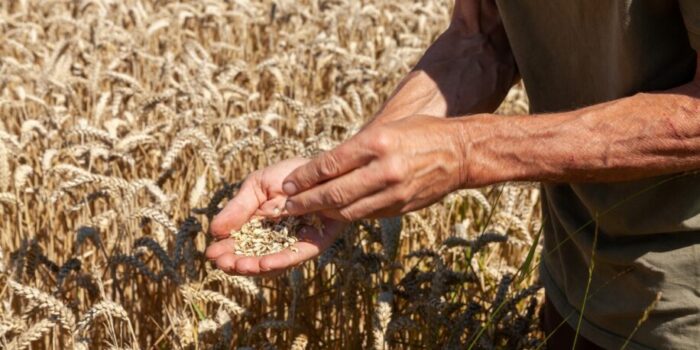
You’re familiar with grains, of course, but there are also ancient grains. So what exactly are ancient grains? Is it a trendy marketing term to make certain products sound more interesting? Does it have anything to do with whole grain? Or is something else going on? Time to cut a path through the ancient-grain field and discover exactly which ancient grains there are.

No, “ancient grains” have nothing to do with marketing. And whole grain simply refers to whether the entire grain kernel is used, including the bran (the layer surrounding the germ). Ancient grains really do exist—and have been around for a very long time. Hence the term “ancient.” Throughout all that time, ancient grains have remained the same. They haven’t been changed through crossbreeding or genetically manipulated by us humans. There are four ancient grains, one of which you probably know. The other ancient grains are (still) not hugely well known.
Spelt
Spelt bread, spelt crackers, spelt pasta: you can’t leave the supermarket without coming across a product containing spelt. A few years ago, this ancient grain became a real craze. That was mainly because fit boys and girls thought for a long time that spelt is healthier than wheat (spoiler: it isn’t). Spelt has been cultivated since 5000 BC. Yep, truly ancient! If you eat spelt as a grain on its own, it has a slightly nutty flavor. It’s also a fairly firm grain, with a satisfying bite. Spelt is somewhat similar to wheat, but the grains are a little more elongated and have a stronger flavor.
Farro
Farro is a truly ancient grain. Some 20,000 years ago, in ancient Mesopotamia, the grain was first discovered. It became hugely popular during Roman times. That popularity later declined because wheat eventually became much more affordable. In recent years, more and more people have rediscovered this Italian grain. Farro is also known as “emmer wheat,” after a cross between einkorn and wild emmer. It’s nutritious, with plenty of fiber, B vitamins and iron. Like spelt, it has a nutty flavor and a firm bite.
Teff
You know spelt, and you may perhaps have come across farro, but teff is probably unfamiliar. That’s not surprising, because it’s truly an up-and-coming grain—even though it is an ancient grain. It has been cultivated for centuries and centuries in East Africa, especially in Ethiopia and Eritrea. Teff contains an enormous amount of nutrients. It’s even the only grain that contains vitamin C. There is white and brown teff. White teff in particular has a nutty, sweet flavor; brown teff has a more pronounced taste. Great for people with gluten intolerance: teff is gluten-free!
Kamut
The ancient grain kamut has traveled across the world during its centuries-old existence. It originally comes from Central and West Asia, but the grain has also been found in Egypt. In 1949, it reached the Western world—to America, to be precise. Kamut is actually khorasan wheat; it is a registered trademark. This grain, related to wheat and durum wheat, is packed with proteins and amino and fatty acids. Incredibly healthy, in other words. This grain also has a nutty, slightly sweet flavor.
How to use ancient grains
You can use ancient grains in various ways. They’re delicious as a base for a salad or as a replacement for a rice or quinoa dish. For example, this dish with mixed grains, kimchi and nori. Did you know that you can also use farro very well as risotto rice? It’s then called “farratto.” You see it more and more often in Italy. Kamut and spelt are also delicious when puffed and eaten as breakfast cereal. And teff flour is an excellent gluten-free option for all kinds of baked goods.
Because spelt is somewhat better known, you’ll find it more easily in the supermarket. You’ll mainly find the other grains in health-food stores or online. Who knows what the future holds if we all start eating ancient grains en masse!
Also read:


