


This is why we’re used to pouring milk over our breakfast cereal
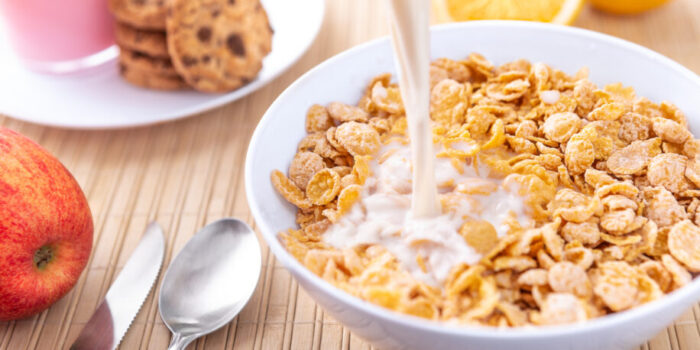
Putting aside the debate about whether you should pour the milk or the breakfast cereal into the bowl first, why milk at all? Have you ever wondered how this habit came about? And of course, we’re including plant-based drinks in the story, because by now they’ve become pretty commonplace.

Of course, there are exceptions, such as pouring orange juice over your muesli, but that never really became a widespread habit, did it? I remember baby food made from crumbled Liga biscuits with mashed banana and orange juice, but once enough teeth had come through, that phase passed. These days, many households can barely keep up with the litres of milk (often plant-based, too), combined with boxes full of breakfast cereal. And this is why:
Early veggie
Around 1870, James Caleb Jackson came up with something in New York State that he called granula: he baked the flour used to make the then (and still) popular graham crackers into a kind of biscuit, crumbled it, and baked the crumbs again. This produced small (rock-)hard pieces, intended to be eaten as or before breakfast. Jackson was a vegetarian, and was probably trying to come up with an alternative to the meat-oriented breakfast culture that was normal at the time. Granula was also said to make a filling snack during a hard day’s work.
Not exactly easy to eat
Whether it was the man himself or his mother who came up with the original idea that these rock-hard chunks could use some softening, Jackson published newsletters containing his mother’s recipes. Lucretia Jackson advised that the grain chunks be soaked in milk or warm water, and the milk idea caught on most with people. Without milk, it was probably a bit like trying to get cement dust down…
Corn competitor
Not long afterwards, John Harvey Kellogg also came up with the idea of producing breakfast cereal, only he called it granola. The changed spelling was intended to avoid a legal battle with Jackson. Kellogg eventually became hugely famous, of course, for his cornflakes, which were also advertised in 1922 as ‘delightful with cold milk’.
Fat chance—actually, delicious
In 2011, a scientific study was published in the Journal of Food Science showing that the fat in milk adheres to the surface of breakfast cereal, meaning that moisture penetrates less quickly (than, for example, water), so the cereal stays crunchy for longer. This should work with plant-based milk too, because it generally contains added fats, or the naturally occurring fats from, for example, the nuts it is made from.
As old as time
These days, many breakfast cereals are so (over)processed and soft that you could eat them without any teeth at all. But a bowl of muesli or cornflakes, or homemade granola with milk or plant-based milk, is still a very popular breakfast or snack. The love for the (leftover) milk that has absorbed the flavour of the cereal is sometimes so great that in America, ice cream is even sold in the flavour ‘cereal milk’!
Read also:
- Granola guide
- Breakfast like a king? According to this professor, you might as well skip it
- You’re better off having pizza for breakfast than muesli
Source: Mental Floss


