


Breakfast Like a King? According to This Professor, You Might as Well Skip It
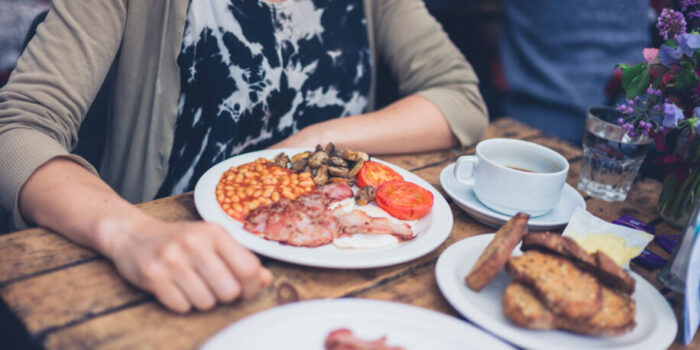
Breakfast is good for you and a healthy breakfast is a must, otherwise you’ll be buying Snickers at the gas station around eleven and your jeans won’t fit in no time. Although, this professor says it really isn’t a disaster to skip breakfast, or to wolf down an Italian breakfast.

Skipping breakfast
‘It’s important to eat breakfast because it provides new energy after the night and gets digestion going,’ advises the Netherlands Nutrition Centre. But which breakfast do they mean? In Great Britain, people tuck into sausages, baked beans, bacon, mushrooms and tomatoes at the start of the day; in Asia, breakfast is often a spicy rice dish, while the average Italian has a cappuccino and a cigarette for breakfast. It doesn’t matter at all, writes Professor Tim Spector in his book Spoon-Fed. He compared a whole stack of studies on the health benefits of eating breakfast, and his conclusion is that you might as well skip it.
Delusion
According to the professor, the idea that cornflakes are healthy is a delusion. ‘They have a high glycemic index, even higher than that of potatoes, and consist mainly of starch.’ But the breakfast-cereal business is running at full speed, with profit margins of more than 40 percent (and therefore a substantial advertising budget). And it’s probably that commercial influence that makes us think breakfast is very important.
What exactly is in those bake-off rolls from the supermarket is almost always… a mystery
Lose weight!
It is generally claimed that you get very hungry when you skip breakfast, causing you to eat a lot and pile on the pounds. Nonsense, according to the professor. ‘There is no evidence for the claim that skipping meals makes you gain weight faster or has a negative effect on your metabolism,’ he writes. ‘Many studies actually showed that skipping breakfast can be a useful strategy for losing weight.’
Happy microbiome
Spector is a fan of skipping meals anyway, and so are his intestines. Brief fasting is good for healthy intestines, he writes. ‘Long periods without food are not good for the microbiome (in the intestines, ed.), but it may well benefit from short periods of fasting, for example by skipping breakfast. After a period of four to six hours without food, some species begin to divide and feed on the carbohydrates in the mucus layer of the intestinal wall, cleaning the intestinal wall and making that intestinal barrier more efficient and healthier.
Frying eggs
His conclusion: experiment for yourself. Can’t get a bite down your throat in the morning? Don’t panic, there’s nothing wrong with that. And if you feel good eating fried eggs with bacon, then go ahead and enjoy them. Breakfast the most important meal of the day? Nonsense.
Also read:
- Your breakfast is fooling you: whole grain isn’t actually whole grain at all
- Sweet potato versus regular potato: which is healthier?
- This is the unhealthiest snack you can order at the snack bar


