



Douwe Egberts coffee soon no longer available in supermarkets?
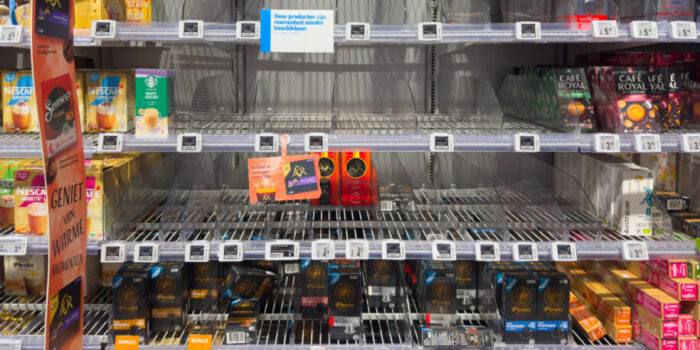
There’s trouble in coffee land again: Douwe Egberts is temporarily no longer supplying coffee to supermarkets such as Jumbo and Picnic. The reason? A heated dispute over prices. According to Picnic CEO Michiel Muller, JDE Peet’s (the manufacturer behind Douwe Egberts) is simply refusing to supply them. “We place our orders, but JDE doesn’t want to deliver.”

Price dispute between Douwe Egberts and supermarkets
This isn’t the first time, either; we recently wrote about the coffee aisle that keeps getting emptier. Earlier this year, Douwe Egberts was already at odds with supermarkets in the Netherlands, Belgium and Germany. The products disappeared from the shelves for weeks. Eventually, the conflict was resolved, but prices rose sharply. Déjà brew, anyone?
Supermarket coffee 25% more expensive
According to JDE, rising costs are to blame. The price of coffee beans has increased considerably in recent years, and they want to pass those costs on. The result: supermarket coffee is becoming up to 25% more expensive. TWENTY-FIVE PERCENT! But Muller says that coffee prices have since fallen again. So why the increase?
Who is right?
JDE points to independent analysts who say that a price increase is justified. At the same time, private-label brands, which also purchase beans, remain on the shelves as usual. And yes, those have become more expensive too. So it’s a broader market trend, they say. But as a customer, you simply want coffee. Preferably affordable.
Empty shelves, full frustration
Once stocks run out, supermarkets may temporarily run out of Douwe Egberts. No Aroma Rood, no Intens, no decaf. And that’s despite coffee being one of the most popular products in the supermarket. The Dutch are coffee lovers through and through. And they don’t want to miss out when they reach the shelf.
Failed harvests
Things aren’t looking rosy. Coffee is becoming increasingly popular worldwide, especially in Asia. At the same time, climate problems in countries such as Brazil, Vietnam and Ethiopia are causing failed harvests. Less supply, more demand: it makes sense that the price is rising. But structurally higher prices? That’s going to make for a very expensive cup of coffee…
Read also:
- Savory coffee is THE trend of 2025: what can you expect?
- Coffee first, breakfast later? You’ll regret it!
- Research proves it: four cups of coffee promote kidney health
Source: AD


