



Dutch shrimp outrageously expensive: what’s going on?
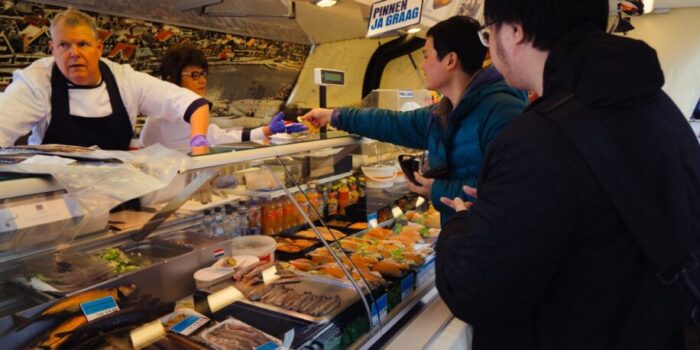
Will Dutch shrimp soon be only for people rolling in money? The fish has become almost unaffordable. What’s going on?

Anyone in the mood for a tasty portion of Dutch shrimp will have to dig deep into their pockets. At Albert Heijn, you already pay €3.99 for 50 grams and €11.49 for 200 grams (of the own-brand Excellent). Jumbo charges €6.79 for 100 grams of Dutch shrimp. Fancy a shrimp sandwich from the fishmonger? That’ll set you back a tenner. And in Belgium, in some places you pay no less than €23 for a shrimp croquette. Yes, really. Twenty-three euros.
Extreme shrimp shortage
Editie NL spoke to shrimp fisherman—what’s in a name—Koos de Visser. According to him, the absurdly high price of shrimp is due to scarcity. At this time of year, fewer shrimp are swimming around. The MSC (an organisation that aims to prevent overfishing) therefore wants less fishing to take place. Shrimp fishermen affiliated with the MSC listen to that advice. At the moment, they fish for shrimp for around 24 hours a week. By comparison: during busy periods, when there are more shrimp, they can work for as many as 100 hours a week.
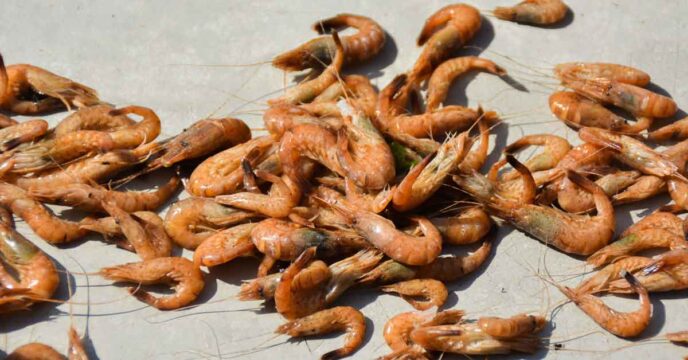
The shrimp shortage is now particularly extreme, says Koos. In any case, every year it’s a matter of waiting to see how many shrimp appear. That depends, for example, on the water temperature, but also on the amount of food in the water. This year, the amount of nutrients in the water is certainly quite low. Exactly why that is remains something the fishermen are still fishing for an answer to.
A peeling machine in Morocco…
Many shrimp have also become more expensive because peeling the crustaceans is so costly. A large proportion of Dutch shrimp goes to Morocco to be peeled there. The wages of Moroccan ‘peelers’ have risen recently. That’s a good thing, of course, but you ultimately see it reflected in the price of the shrimp. Add to that the fact that you lose quite a few kilos of shrimp during peeling—for every 3 kilos of unpeeled shrimp, you get 1 kilo of peeled shrimp back—and you understand why Dutch shrimp are worth their weight in gold these days.
There is, incidentally, a development underway: more and more peeling machines are also appearing in the Netherlands. Not many yet, but they are becoming increasingly common. Who knows, in the future Dutch shrimp may no longer have to be stripped of their jackets in Morocco. Moreover—as fish wholesaler Alex Koelewijn told RTV Utrecht in mid-March this year—the price of Dutch shrimp could look very different in summer from how it does now. More than two months later, however, that still does not seem to be the case.
Wind farms: less room to cast nets
There are even more factors at play: fuel for fishermen is expensive. And fishermen have less and less space to cast their nets. The sea is increasingly being shared with wind farms, and more areas are being designated as nature reserves. Then there is the shrimp fishing restructuring scheme, which many shrimp fishermen—nu.nl mentions around a quarter of all shrimp fishermen—are making use of.
Dutch shrimp unaffordable
The price of Dutch shrimp has now risen so high that some restaurants are removing the Dutch delicacy from their menus altogether. A shrimp sandwich can easily cost €8.50. For two sandwiches, you’re €17 poorer—that apparently really is too much for many people.
Well then… buy frozen shrimp, perhaps? They’re still considerably cheaper than thawed shrimp. Hopefully you can still find them in the freezer at somewhat reasonable prices..
Also read:
- Shrimp vs. prawns: what’s the difference?
- Common mistakes when preparing shrimp
- Recipe for the most delicious shrimp cocktail
- YES: Fair Trade MSC tuna salad is finally available in supermarkets
Sources: RTL Nieuws, RTV Utrecht, Nu.nl


