



EU tightens rules on poultry and egg exports from Ukraine
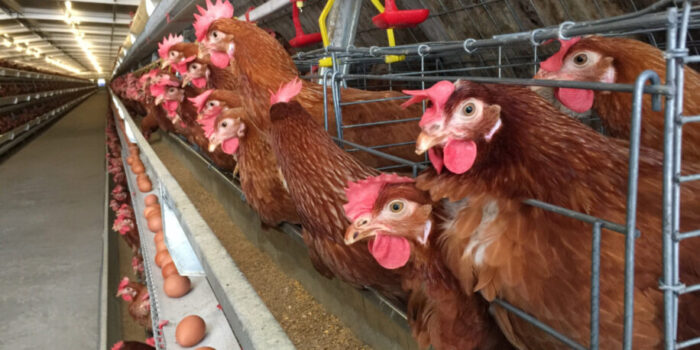
You might think that the days of battery-cage eggs and factory-farmed chickens are now a thing of the past in the Netherlands. The former, for example, are no longer sold in supermarkets — which is of course a hugely positive development. But did you know that this does not automatically mean you are not bringing battery-cage eggs into your home? Even though the EU has banned them for ten years already, what is the situation?

Products containing battery-cage eggs are purchased cheaply in Ukraine, which is not an EU member. So it is quite possible that you have products at home (such as pasta, biscuits, pizza and mayonnaise) that contain battery-cage eggs.
More battery-cage eggs than before
In fact, we are bringing more and more battery-cage eggs into our homes. Imports of these from Ukraine have quintupled since 2021 (!). Incidentally, this is not only about battery-cage eggs, but also poultry exports: these have been under fire for more than a year and a half, and there are even fears for the survival of the Dutch poultry sector because of this enormous trade. A year and a half ago, in June 2022, a tariff-free trade exemption was introduced, making it extremely cheap to bring poultry from Ukraine to the Netherlands.
Unfair trade
The Netherlands is by far the largest importer of chicken from Ukraine, which is supposedly allowed to enter the EU tariff-free because of the war situation. Of the 20,000 tonnes of Ukrainian chicken that enter the EU every month, 60 percent goes to the Netherlands. This of course puts pressure on the meat poultry sector in the Netherlands. But hopefully this will soon come to an end: from 1 June, Ukraine may continue to use this tariff-free trade exemption for another year — except when it comes to eggs, poultry and sugar. A levy will have to be paid on those three products from then on — unless they stay within the permitted quantities.
The hard figures
Since the tariff-free trade exemption came into force, poultry exports have risen insanely: from 90,000 tonnes in one year to 218,000 tonnes in one year. Notably, it was already announced in 2019 that Ukraine could export an additional 50 million kilos of chicken to the EU, which also drew a great deal of criticism at the time. Not only in the Netherlands, incidentally, as French farmers have also taken to the streets in recent years to protest against this export policy.
One final tip: do you want to make sure you are not bringing battery-cage eggs into your home? Always check the labels of the products you buy. It is no guarantee, but it is likely that when a company invests in barn eggs or free-range eggs, it will mention this on the label — because this costs considerably more and they will not do so without mentioning it.
So if a product such as chocolate, biscuits or mayonnaise simply lists ‘eggs’ as an ingredient, there is a very good chance that these are battery-cage eggs. No, this is not a foolproof method (unfortunately, there isn’t one), but it is a start.
Read also:
- In this province, frikandellen are the cheapest (and the most expensive!)
- The dark secret behind Kopi Luwak, the world’s most expensive coffee
- Want to do your grocery shopping cheaply? Head to Belgium
Source: NOS, AD.nl, Pluimveeweb, nieuweoogst.nl


