


Get even more out of your rice cooker with these tips
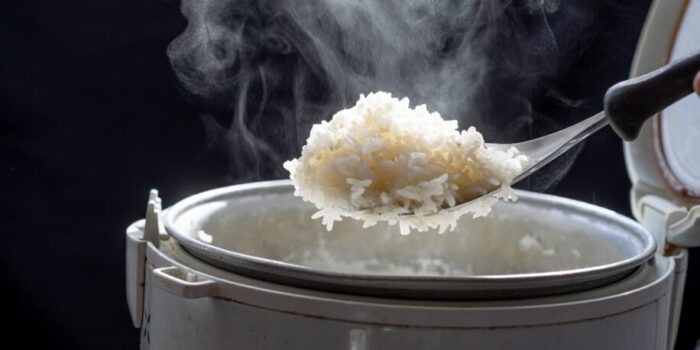
Have a rice cooker? Lucky you! Because besides cooking perfect rice every time, your rice cooker can do so much more. It’s downright jealousy-inducing…

Although I have fond memories of the rice cooker from my childhood, with which my mother repeated the ritual several times a week of rinsing rice until the water ran clear and then measuring exactly one elegant finger joint of water into the pot, I’ve never owned one myself. Too little space, and I do have a slight preference for other essential kitchen appliances. A shame, really, because you can do quite a lot of variety with your rice cooker!
The story of the rice cooker
And what a success story the rice cooker is! The journey of the electric rice cooker from the first industrial model in 1923 to the indispensable appliance it is today is told in detail in the book Where There Are Asians, There Are Rice Cookers, written by Professor Yoshiko Nakano. Long story short: the first electric rice cooker, called the denki-gama, was developed by Japanese electronics giant Toshiba in 1955. The rice cooker consisted of two pans that fitted inside each other. The larger pot was filled with water, steaming the rice placed in the smaller pot.
True success only came with the invention by rival company Matsushita — now Panasonic — which brought a simpler (because automatic) and cheaper appliance to market, with one pot under the National brand. Once trade from Japan to Hong Kong got going in the 1960s and 1970s, and from Hong Kong to the rest of Asia and eventually the rest of the world, rice cooker sales really took off. By now, the global market value of rice cookers exceeds 3.2 billion dollars! Not surprising when you consider that rice is the main component of the daily meal in around 100 countries. By the way, did you know there are 40,000 different rice varieties worldwide?
More than just rice
Despite what their name suggests, rice cookers can be used for so much more than just cooking rice. As Nakano explains in her book Where There Are Asians, There Are Rice Cookers, a young Japanese diplomat studying at the Chinese University of Hong Kong in the 1970s was shocked when a friend prepared a complete three-course dinner using only a rice cooker, consisting of rice, canned beef and tomato soup. And did you know you can also bake a cake in a rice cooker, cook eggs and poach fruit?
If you don’t have a rice cooker yet (I’m emphatically talking to myself here too!), then you know what’s in store! If you already have one at home, get started with the suggestions below.
Chicken and rice 2.0
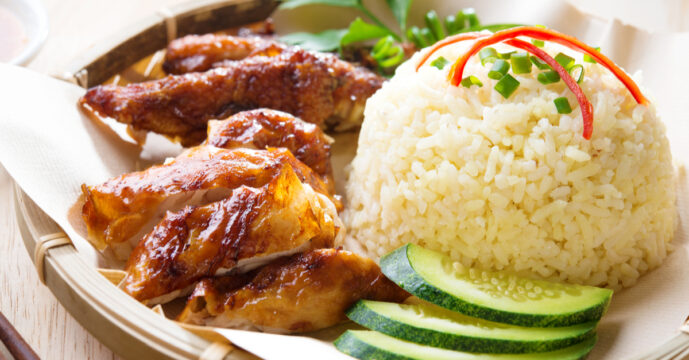
Emma previously wrote for us about the dish Hainanese chicken rice, which consists of steamed rice with poached chicken and flavorings such as spring onion, garlic and ginger, generously drizzled with delicious chili oil. And do you know what’s a very good idea? Use the chicken broth to cook the rice, so the broth’s full flavor infuses the rice completely. Yum!
From clay pot to electric wonder
In general, many rice dishes that would otherwise be cooked in a donabe (a Japanese pot made from special clay that can be used over a flame) can be adapted for cooking in an electric rice cooker. Use fragrant rice (for example, jasmine rice) and aromatic seasonings, and use broth with a few spoonfuls of soy sauce or tamari instead of water. Place salmon or chicken on top, or beautiful large Chinese mushrooms, and all the flavors and juices will make the rice ten times more delicious.
Mix it up, press the button and done
You can easily vary things with leftover roast chicken or pork, or fried salmon placed on top of the rice before you turn on the appliance. And don’t forget to add something spicy to the pot too, such as chopped ginger, crushed garlic cloves, and/or crushed Sichuan peppercorns. Trust us, you’ll soon have an incredibly delicious, fragrant bowl of rice!
Easy does it in the rice cooker
Have you always wondered how a rice cooker knows when to stop cooking? The answer is wonderfully low-tech. It switches off when it detects a sudden rise in temperature, which happens when all the water has boiled away and the heat can no longer evaporate.
Read also:
- Why you should make Sergio Herman’s chili oil right away
- Essential: these kitchen gadgets from top chefs
- Hit by corona: Chinatowns around the world are suffering enormously from the pandemic
Source: Taste, Quartz


