


Hand-Cut Soba Noodles in Japan
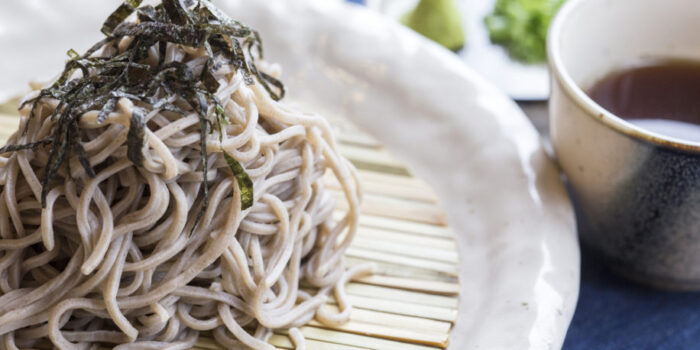
In Japan, Emma tastes freshly cut soba noodles that you dip into a real Japanese umami bomb.

Editor Emma de Thouars (now back at our editorial headquarters) booked a one-way ticket to Asia and, during her travels around the world, sometimes stood in line for hours for local favourites. This time, cold soba noodles in Tokyo.
When I was walking through a night market in Ueno (Tokyo), I was approached by a man selling kebabs. I kept walking as I told him that we have more than enough kebabs in the Netherlands and that I was craving Japanese food. When he heard that, he couldn’t wait to point me towards his favourite soba restaurant. He was so enthusiastic that I had to take his advice—and sure enough. Before I knew it, I was sitting at the bar slurping away while fresh soba noodles were being made right in front of me.
Buckwheat
Soba is Japanese for buckwheat, but it almost always refers to buckwheat noodles. The buckwheat gives the noodles a slightly darker, almost wholegrain flavour. In the restaurant, you have three options. Alongside the standard soba, a white version is also on the menu. This noodle is made using only the core of the grain. There is also soba made from 100 per cent buckwheat. The standard version contains wheat flour as well as buckwheat. Fit girls and boys discovered soba noodles some time ago thanks to buckwheat’s high nutritional value. This means that these days you can find the dried variety in almost every supermarket.
When the noodles are finished, pour broth into the sauce to create a soup
According to many Japanese people, the best way to taste soba in its purest form is to eat the noodles cold, with an accompanying dipping sauce called soba tsuyu. This dashi-based sauce has a deep, rich flavour and is a real Japanese umami bomb. In the Netherlands, you can buy the sauce at larger Asian supermarkets. When the noodles are finished, pour broth into the sauce to create a soup that you drink at the end of the meal. Add a little finely sliced spring onion and you have a fantastic lunch.
Text: Emma de Thouars


