


Hard butter is super annoying, but what’s the best way to store it?
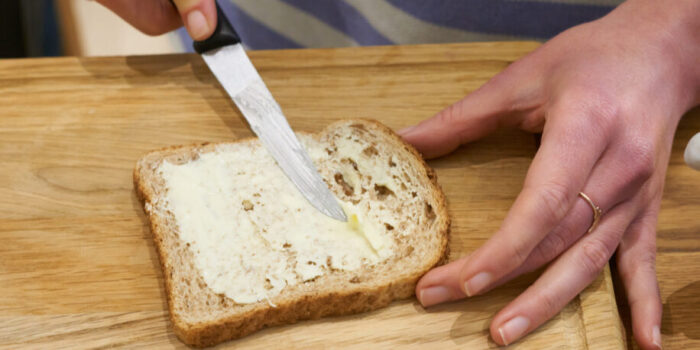
Even within a single household made up of several people, opinions can differ on where best to store butter. Personally, I like it when the whole pack simply stays out of the fridge as standard: sometimes I suddenly feel like baking cookies and urgently need soft butter. But sometimes I don’t think about cookies for a week, and that packet of butter just sits there on the counter growing stale. Is that bad?

Because you don’t often see mouldy butter (at least, I don’t). But butter can indeed spoil, and on nu.nl, two experts explain how that works. You’ll also get a tip straight away on how to prevent it!
Not all spoilage is the same
Rijkelt Beumer, a microbiologist at Wageningen University & Research, explains that there are different types of food spoilage. One of them is chemical spoilage, which occurs after a chemical reaction, such as oxidation when exposed to air. This is more likely to happen with butter than microbial spoilage, for example, in which bacteria, yeasts and moulds grow in the product.
Hot or not
Wieke van der Vossen, an expert in food safety and labelling at the Netherlands Nutrition Centre, agrees. Chemical spoilage also occurs sooner outside the fridge than inside it. According to Beumer, it happens approximately two to three times faster when the temperature rises by ten degrees. In the case of butter, oxidation takes place, causing the fats to react with oxygen. As a result, the structure and colour of the butter change, and its smell and taste become somewhat sour, says Van der Vossen. Rancid butter—yuck.
Little by little
That’s why she recommends storing butter in the fridge. However, a small portion that you’ll eat within a week can be stored outside it. That way, you’ll always have the tastiest butter completely ready to spread! For those who use very little, she recommends freezing the butter in small portions; it can then be kept for at least two months. But never refreeze it, because “the droplets of water can then clump together, become larger, and make it easier for microorganisms to grow in them.”
Also read:
- Facebook group celebrates forgotten banana and blue sandwiches
- Homemade garlic butter is absurdly delicious and so easy to make
- Once and for all: can you actually eat mouldy cheese or not?
Source: Nu.nl, read the full article here


