


Once and for all: can you eat moldy cheese or not?
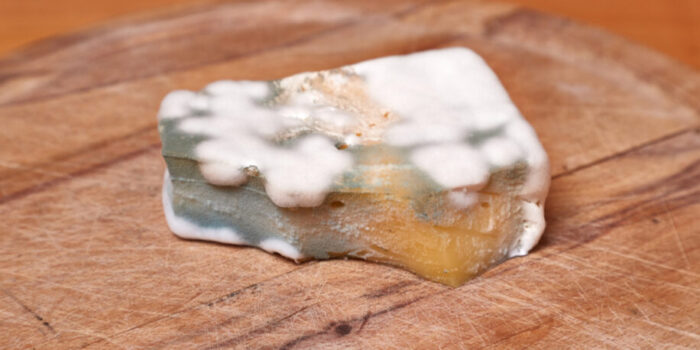
We previously published a clear story by our colleague Sabina about how mold develops on food and what molds actually are. But when it comes to mold on cheese, things may not always be quite so clear. After all, many people happily eat a piece of red-, white- or blue-mold cheese (white-mold cheeses can be ‘everyday’ cheeses such as brie and camembert). So what’s the wise thing to do when you come across mold on a piece of cheese where it doesn’t belong?

I’ve experienced it myself, and doesn’t it always seem to happen right when you decide to shave an extra-generous amount of cheese for a decadently topped thick pan-grilled cheese sandwich, or a tuna melt? In any case, exactly the kind of moment when cheese is truly indispensable, and you simply can’t settle for a slice of bread with peanut butter. So what do you do?
Moldy cheese: can it hurt you?
The advice remains: cut it away, at least when it concerns a piece of hard cheese, and then you can simply eat the rest. Cut generously around the moldy spot; the Voedingscentrum advises 1 cm. That’s good news—it means the rest of your cherished piece of Stolwijker is safe, at least.
The experts’ advice
Old Amsterdam (who also make those amazing cheese bitterballen with Kwekkeboom) also addresses the question ‘There’s mold on my cheese. How did it get there, and can I still eat the cheese?’ clearly on their website. Their answer: ‘Mold is a natural process that can occur when cheese is not properly packaged. Most molds found on cheese are harmless, but it is wise not to eat them. If only part of the cheese contains mold, simply cut around the mold (leaving a centimeter on all sides). The remaining cheese is perfectly safe to eat.’ (This is in addition to the option of sending a moldy piece of Old Amsterdam back to them if something is wrong).
Bye-bye, little goat
With soft cheeses, it’s a different story. The softer the substance on which the mold is growing, the easier it is for the mold threads to penetrate to the core of the product. This doesn’t necessarily have to be harmful, but it can cause symptoms. So throw it away, unfortunately. Also, even when you don’t immediately see mold forming, it’s often possible to detect spoilage from the smell of a cheese. Of course, some cheeses simply stink by nature. But as soon as you smell something ammonia-like, your little cheese is beyond saving too.
Read also:
- The best-before date makes me paranoid
- These tips will help you make a top tuna melt
- Albert Heijn warns about Spanish cheese: ‘fecal bacteria’ present


