



Help! The Chinese-Indonesian restaurant culture is fading…
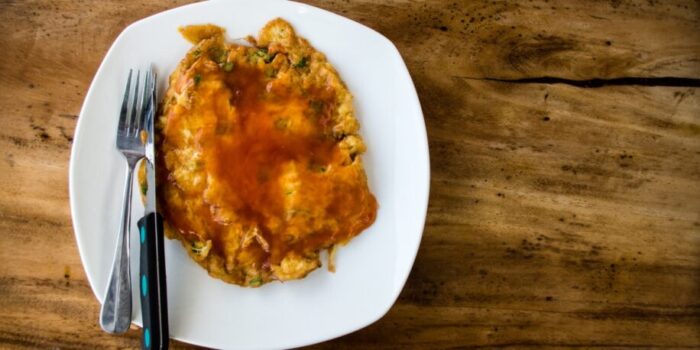
What is a familiar sight to virtually everyone throughout the Netherlands, from Ameland to Weert and Vlissingen, is the old-school Chinese-Indonesian restaurant, often a family business that has been successful for years. At FavorFlav too, ‘the Chinese’ has a warm place in our hearts as a fairly unique concept that, in this form and with these dishes, you will not quickly come across in other countries. And there are more reasons why we should cherish places like Happy Garden and Jade House…

Recently, we wrote about the crisis Chinatowns around the world are facing since the outbreak of COVID-19. Our own capital also has a Chinatown, and we sincerely hope that everyone who has the opportunity to visit Amsterdam’s Nieuwmarkt district does so at some point and buys or picks up something there (and of course, not everyone should go there at once, as recently happened in the Vondelpark). But the ‘local’ Chinese-Indonesian restaurant, of which so many villages and cities in the Netherlands have one, also has a number of unique characteristics that must not be lost.
Dutch cultural heritage
Because did you know that Chinese-Indonesian restaurant culture is officially recognized as intangible heritage? This happened last year, when the Dutch Centre for Intangible Cultural Heritage took a close look at the national value of these restaurants. Quite apart from the dishes, everything contributes to the experience: the interior, the long-shaped prawn crackers, the ‘sambal on the side’ in little snipped-open sandwich bags, the aquarium and, of course, the beer while you wait. That beer in a stackable glass with a wide rim was of course for my father in the old days, while on rare occasions I was allowed a Coke.
Long campaign
The Meer Dan Babi Pangang foundation, which promotes Asian culture, campaigned hard for inclusion on the list and sounded the alarm over the declining number of Chinese-Indonesian restaurants in the Netherlands. Among other things, the foundation reported that, partly due to the lack of new Chinese chefs entering the profession, this restaurant culture and its dishes are at risk of disappearing. In addition, the generally rich and heavy food no longer fits as well with consumers’ increased desire to eat more healthily. All of this is contributing to the gradual disappearance of this essentially quintessentially Dutch phenomenon.
By being included on the list, this culture, with its characteristic interiors and dishes, can be documented, preserved and passed on. And isn’t that exactly what we want? Just like traditions such as fierljeppen, the Easter bonfire in Espelo and the flower parade in Lichtenvoorde, this restaurant tradition has now become part of our national cultural DNA. Let’s hope it does not eventually become a vague memory, and try to contribute whatever we can. I know what we’ll be picking up this weekend! And anyone who wants to learn more about this disappearing national treasure can read all about it in journalist Mark van Wonderen’s book with wonderful photographs: Chin.Ind.Spec.Rest.
Read also:
- We love the neighborhood Chinese restaurant
- This ingredient makes every dish taste authentically Chinese
- Ode to the late-night Chinese restaurant
Source: NOS


