



Hit by corona: more and more hospitality businesses are going bankrupt
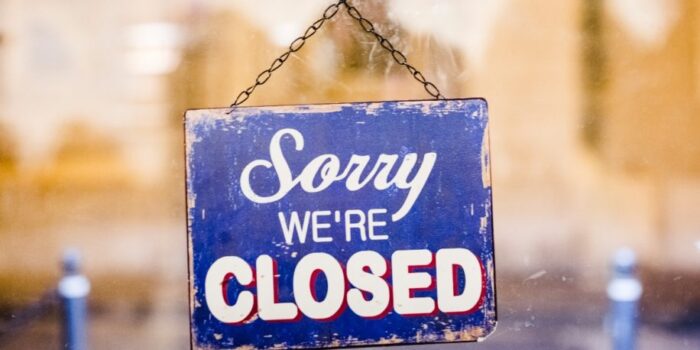
This week, the government announced that the measures to prevent the spread of the coronavirus would be extended until May 20, 2020, meaning that restaurants and cafés must keep their doors closed at least until then. My heart aches for the hospitality industry. Because now that the mandatory closure of the hospitality sector is going to last even longer, many hospitality businesses will not even make it to the possible reopening on May 20.

By that date, the hospitality industry will have been closed for more than nine weeks. A disaster. Because many hospitality businesses will last only a few more months at most if nothing changes about the measures imposed by the government (the current emergency package already falls far short of covering all ongoing costs) and property landlords.
Corona misery
Of course, there are (cautious) success stories in this insane coronavirus era. Such as RIJKS*’s delivery meal and Loetje Drive In. But the corona misery is much greater. More and more hospitality businesses are going bankrupt. The first businesses to collapse were, of course, the vulnerable ones, but before long the less vulnerable businesses will also fail to make it. A month ago, Koninklijke Horeca Nederland (KHN) estimated the damage to hospitality entrepreneurs at around €5.1 billion, and this amount will only increase.
Everything comes to a standstill overnight
Marcel Hansen, a hospitality man through and through, had just been open for two weeks with his new business LadyPapa in Bergen. Marcel: ‘We had two fantastic weeks, and then we got the call that we had to close. So now everything has come to a standstill overnight. We also had to put 22 full-time employees on inactive status. My other businesses, such as het IJkgebouw in Alkmaar, also had to close. I employ sixteen people on permanent contracts at het IJkgebouw, and they must continue to be paid.’
‘This summer I’m going to open despite knowing better, because I really can’t recoup the costs in a 1.5-meter society. Because let’s be honest: for virtually every hospitality business, keeping 1.5 meters apart really is impossible…’
Hardly a gold mine
If hospitality businesses are allowed to reopen in the 1.5-meter economy, it will offer little relief for many businesses. Because how are you supposed to manage with one-third of your normal turnover?! A normal turnover is already hardly a gold mine for many hospitality businesses because of their small margins. Marcel: ‘Many people have the impression that you make a lot of money in the hospitality industry. Unfortunately, the opposite is usually true. If you run things well, you as an entrepreneur keep around 10% of the turnover. And that applies to a successful business.’
‘So for every beer sold, the entrepreneur has one sip left over, and that’s if you do everything right. An average restaurant or café has 35% personnel costs, 30% purchasing costs, 10% accommodation costs and 15% other costs (including insurance, repayments, maintenance, advertising, accountant’s fees, depreciation and investments). And these are glorious figures. Taxes must also be paid on the 10% that remains. What is left after that is for the entrepreneur to live on, pay the mortgage and, preferably, save as well. Hardly a gold mine, in short.’
A wave of bankruptcies
It is inevitable that numerous businesses will collapse soon. Even though many hospitality entrepreneurs have launched all kinds of initiatives to generate turnover despite the forced closure, such as restaurant vouchers. But these kinds of initiatives also have a downside, because the turnover now generated by selling vouchers will have to be earned later. And deferred payment obligations mean that payment does not have to be made immediately. The deferred payments, loans and interest will have to be caught up later. And next month, holiday pay will also have to be paid out…
The coming period will make clear exactly how great the consequences of the coronavirus will be for the hospitality industry. But it is abundantly clear that without additional government support measures and accommodating property landlords, a wave of bankruptcies will follow.
A terrace full of mannequins
On LadyPapa’s once-lively terrace, where food can now be collected a few days a week, beautifully dressed mannequins from the clothing store across the street—which is allowed to remain open—now adorn the space. An ideal solution, because the restaurant looks less bare and dark, and customers have something to look at while they wait. And hopefully they will also pop into the clothing store afterwards.
Read also:


