



How to make the popular Korean gimbap
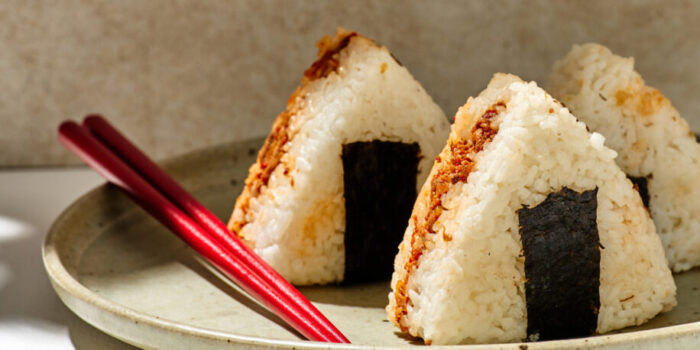
You’ll often find this gimbap at 7-Eleven in Korea. It’s typically a snack you eat when you don’t have much time to eat or feel like something savory late at night. This seaweed-wrapped rice is inspired by Japanese rice balls, except these are shaped like a triangle: samgak. You need a special mold to make them. You can also buy special plastic seaweed wrappers to make the gimbap look exactly as if you bought it at 7-Eleven, but that’s not necessary at all. Just cut strips from a sheet of (unsalted) seaweed and wrap them around the rice triangles. It looks just as good.

More importantly, you can vary the flavors and filling as much as you like. For example, you can heat up some bokkeumbap (fried rice with meat and vegetables) and shape it in the mold. Or mix rice with a little sesame oil and Japanese furikake, then shape it into a triangle. The recipe below is made with tuna and kimchi. You can replace the tuna with small pieces of pork belly. You can also mix tuna with mayonnaise, sesame oil and sesame seeds and use that as a filling.
How to make Korean gimbap
- If you haven’t already, cook the rice in a rice cooker or saucepan according to the package instructions. Mix the rice with the sesame oil and sesame seeds in a bowl and season with salt and pepper.
- Squeeze as much moisture as possible out of the tuna. Heat the olive oil in a frying pan over medium heat and fry the tuna with the kimchi, garlic, soy sauce, sugar and gochugaru for approximately 5 minutes, or until the kimchi is soft. The mixture should be fried relatively dry.
- Now fill 1⁄3 of the rice triangle mold with rice. Spread 1⁄3 of the tuna filling over it and top with rice. Press down firmly, then push the filled rice out with the spring.
- Take a strip of seaweed. Press its end with your thumb onto the center of the rice triangle (hold it with the point facing up) and fold the seaweed underneath to the back. Press the end firmly onto the back as well. If necessary, moisten the seaweed slightly.
- Make all 8 rice triangles this way. Serve with soy sauce, if desired.
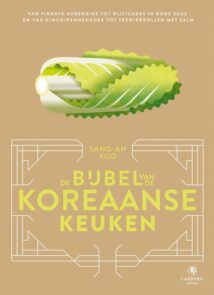
Title: The Bible of Korean Cuisine
Author: Sang-Ah Yoo & Myung-ki Min
Price: €34.99
Publisher: Carrera
In The Bible of Korean Cuisine, Myung-ki Min and Sang Ah Yoo take you on a journey through Korean cuisine. It is a surprising and healthy cuisine in which fermented ingredients such as kimchi, gochujang and doenjang, together with rice, noodles, all kinds of vegetables and seaweed, fish, meat and tofu, form the basis for endless dishes.
Also read:


