



Six Korean Seasonings You Need to Know
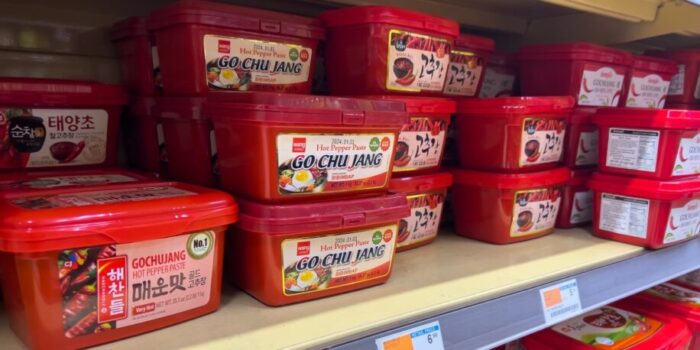
The Korean kitchen is a surprising and healthy cuisine, in which fermented ingredients such as kimchi, gochujang and doenjang, together with rice, noodles, all kinds of vegetables and seaweed, fish, meat and tofu, form the basis for countless heartwarming dishes. You need to have these seasonings at home to make the most delicious Korean dishes.

You can find some products at Albert Heijn, while for other products, such as doenjang, you’ll have to visit Tjin’s or Amazing Oriental. But that’s certainly no punishment, because shopping here and filling your Korean pantry is a delight.
Six Korean seasonings
1. Korean chili flakes: gochugaru
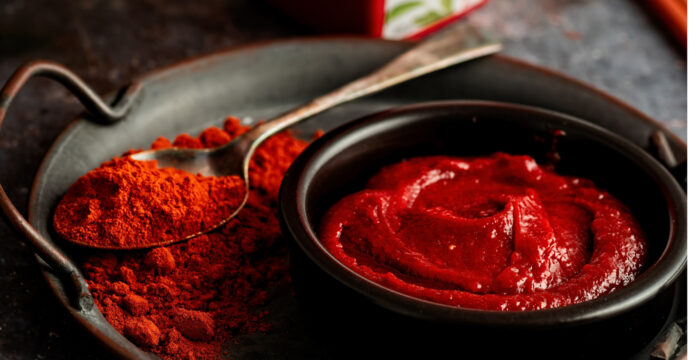
Korean dried chili pepper powder has a spicy, smoky flavour and is used for kimchi and kkakdugi, among other things, and to give soups and marinades extra heat. Everyone knows kimchi. Kkakdugi is its fresh, slightly sour, crunchy cousin. The spicy cubes are made from Korean radish, but you can also use kohlrabi or daikon. Gochugaru has a more neutral flavour than its spicy counterpart gochujang, which is sweeter.
2. Fermented chili pepper paste: gochujang
A Korean fermented chili pepper paste used to make dishes spicier and sweeter. You can use it as a dipping sauce and to make sauces and marinades. It also acts as a binder. Why not try Gochujang Chicken Noodle Soup or meatballs in sticky sauce?
3. Fermented soybean paste: doenjang
This fermented soybean paste is instantly recognisable by its pungent smell. For many Koreans, it is the smell and taste of home, of Korea. Its savoury, earthy flavour livens up stews, soups and dipping sauces. Doenjang is based on blocks of meju, ‘bricks’ of compressed, dried fermented soybeans, which are also used for those óther typically Korean seasonings: ganjang (soy sauce) and gochujang (chili pepper paste). Try making Korean pork belly wraps: so delicious!
4. Korean dipping sauce: ssamjang
Made mainly from gochujang (red chili pepper paste) and doenjang. Essential with lettuce wraps filled with rice or with meat. Ssam means something like ‘wrapped food’ (rice wrapped in a lettuce leaf, for example). Jang refers to fermented sauces. You can simply buy ssamjang ready-made at an Asian supermarket, just like doenjang or gochujang. The dipping sauce is also perfect for dipping cucumber, carrot, mild green peppers or whole cloves of raw garlic.
5. Black bean sauce: chunjang
Fermented black bean paste with a savoury, earthy, slightly sweet flavour. The basic ingredient for jjajangmyeon, noodles in black bean sauce.
6. Soy sauce: ganjang or gukganjang
Used in Korean cuisine in the same way salt is used in Western cuisine. Instead of reaching for the salt shaker, people in Korea reach for the soy sauce bottle. There are four basic types of soy sauce in Korea. Each soy sauce has a T.N. number, which indicates the quality of the product. 1.0 is the lowest score and 1.7 the highest. So if you have a soy sauce with a score of 1.7, you have the very best quality. You can use it to season meat, fish, vegetables and soup. Gukganjang is usually used for the latter: soy sauce specially made for soups. It is slightly saltier than regular ganjang.
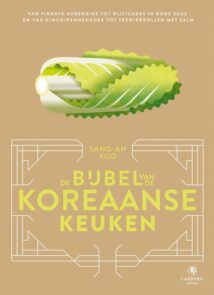
Title: The Bible of Korean Cuisine
Author: Sang-Ah Yoo & Myung-ki Min
Price: €34.99
Publisher: Carrera
In The Bible of Korean Cuisine, Myung-ki Min and Sang Ah Yoo take you on a journey through Korean cuisine. A surprising and healthy cuisine, in which fermented ingredients such as kimchi, gochujang and doenjang, together with rice, noodles, all kinds of vegetables and seaweed, fish, meat and tofu, form the basis for countless dishes.
Also read:


