


It’s National Frikandel Day! Impress everyone with these awesome facts
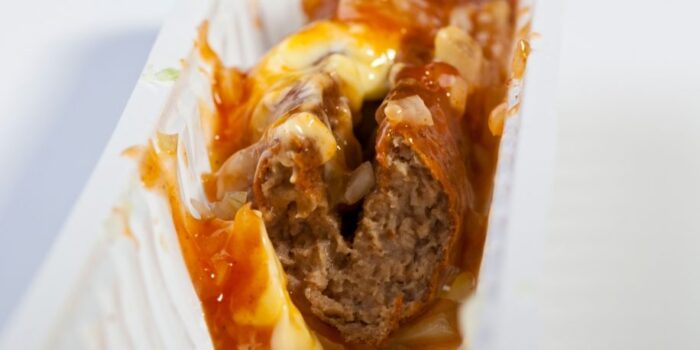
It might just be FavorFlav’s Favorite Flavor: the frikandel. We can’t get enough of it. So on February 4, we celebrate as if it were our own birthday, New Year’s Eve or King’s Day: today is National Frikandel Day! Serving you: our favorite snack facts.

February 4: D-Day
The number 4 and the month of February are usually associated with Valentine’s Day on February 14. But to us, nothing is more romantic than sharing an old, familiar frikandel on the couch. On February 4, we take a moment to celebrate this—and we’ve been doing so since 2014. Hats off to whoever came up with National Frikandel Day! If you want to show off your Frikantrivia at the snack bar today, be sure to read on.
How many?!
We’re not the only ones crazy about that golden-brown stick of joy. Since 1990, the frikandel has even been more popular than the kroket. No wonder, when you hear that the average Dutch person eats 35 a year and that 600 million frikandellen are sold in supermarkets and cafeterias annually. 600 million! That’s about the average house price in Amsterdam and the number of flavors Tony’s Chocolonely has launched.
A little record
We do wonder how much Sjonnie Noordeinde has skewed this average upward. In 2005, he ate 47 frikandellen in one hour. That’s 9,400 calories! But hey, at least you get to have a record in your name.
Udder and eyes
We really need to put an end to the myth that udders and eyes are found in frikandellen. Okay, admittedly, udders were once used in the del, but that hasn’t happened since the 1980s! Eating frikandellen is actually super sustainable-ish! Frikandellen are primarily made from mechanically separated meat. Yes, it sounds gross, but it’s actually a good thing. By scraping the meat from chicken, pork and beef bones, we can continue to enjoy that elongated delight, and every bit of meat from the animals gets used. Except for the udders and eyes, that is.
The beginning of the del
There’s quite a debate over who invented this brilliant culinary creation. One possibility is that the frikandel was invented in Dordrecht in 1954 by butcher’s apprentice Gerrit de Vries, after he was no longer allowed to sell meatballs. Clever as he was, he made an elongated version, and when a German customer called it a “Frikadelle,” all hell broke loose.
According to the Beckers company, it was butcher’s son Jan Bekkers Jr. whom we should warmly thank for his invention. Inspired by American snack culture, he wanted to develop a sausage without a casing. After some experimenting, the frikandel—the sausage without a casing—was first rolled out in 1959.
But frankly, I couldn’t care less who made the sausage. It’s simply incredibly delicious. So hurry to the snack bar before the day is over, give your favorite employee a bouquet of flowers and enjoy this delicious piece of brown fruit a little extra today.
Also read:


