



Know before you go: 10x Croatian delicacies you might want to avoid
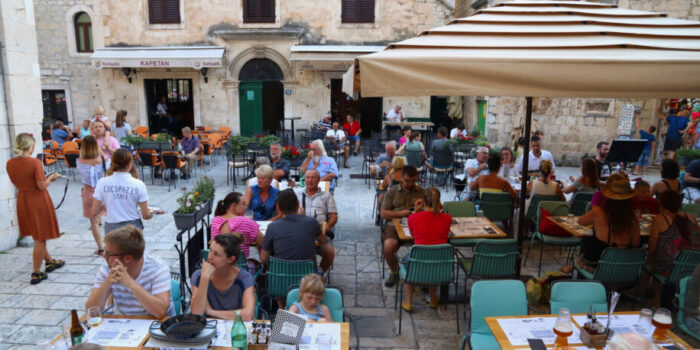
An azure-blue sea, fantastic nature, ancient cultures and an incredibly friendly population—it’s only logical that Croatia is one of the most popular holiday destinations of our time. The only shame is that the menu gives you so few clues. Luckily, we’re here to help you with advice and practical tips. This way, you can avoid dormice and complicated blood sausage on your plate.

Žganci
This poor man’s dish is made from cornmeal, cooking oil and salt. Let it simmer over low heat for a while and your stomach filler is ready. Praise be to the dish that kept hard-working farm laborers on their feet for centuries, but why would you do this to yourself while on holiday on the Adriatic Sea?
Istarska supa
In the slightly strange but actually tasty category: this Istrian soup that isn’t soup. What is it, then? A mixture of warmed red wine, olive oil and sugar in which toasted bread is soaked. Wonderfully warming in winter. In the middle of summer, perhaps a little too much of a good thing—unless you’re going for a long walk, maybe.
Puh
Croatia was once part of the Roman Empire, and you can see it. Sometimes even at the table, as this dish of dormouse proves. Say what?! The fluffy-tailed rodent is grilled whole, after which you pick the meat off the bones. A real delicacy, according to the ancient Romans, who fattened the little animals in a specially designed glirarium. Strange fellows, those Romans. We’ll pass.
Liska
Anything marinated in garlic, rosemary and bay leaf gets our approval. Especially if it is then braised in red wine. Anything? No, not quite. In the Neretva Delta, coot has traditionally been eaten. You know, that water bird with the big white feet. Admittedly, you have to make quite an effort to still find this on the menu. But still. Coot. Ne hvala.
Krvavica
The delicacy you knew was coming. We admit it: blood sausage makes it onto our lists of questionable dishes from abroad time and again. Despite its many advantages. Because it is of course wonderful that every part of an animal is used after slaughter. Meat scraps also go into the sausage, as do leftover millet, rice or buckwheat, for example. And delicious spices: allspice, cloves, cumin… Such a shame about that one drawback: blood sausage.
Bikla
This one is for drinking and bright purple. Sounds unappealing? Just wait until you hear what’s in it. Bikla consists of a mixture of fresh goat’s milk and young wine. Wonderfully refreshing, older Croatians say. We’ll have an orange soda instead.
Vitalac
The inhabitants of the island of Brač waste nothing. Even the offal of lambs and kids is threaded onto skewers, seasoned and cooked over a fire. Halfway through cooking, the meat is wrapped in intestines and—hey presto—placed back over the fire for a crispy crust. You won’t find this dish anywhere else in Croatia, and Croatians therefore regard it as cultural heritage. Oh-ing and ah-ing before walking on is an option.
Žabe i jegulje
More deliciousness from the waters of the Neretva Delta. This is a kind of surf and turf, but Croatian-style. In other words: frogs and eels in a spicy stew. To make it even more fun, you can eat this dish during a boat trip in a traditional lađa. It hardly gets more adventurous.
Juha od kamena
Something completely different from innards or vermin. On the Adriatic coast, a soup is made from… stone. More specifically, hollow stones from the sea, preferably covered with little shells and shrimp. In fact, they make a broth from them, together with onions, carrots, potatoes and tomato. Add olive oil, some parsley, pepper and salt, and your stone soup is ready! When the soup is served, the stone lies in the middle of your plate as a garnish—and undoubtedly as a conversation piece too.
Stonska torta
Butter, sugar, flour, eggs, penne. Stonska torta is a kind of layered cake with pasta, usually penne. In the old days, pastries were a luxury, and using pasta as an ingredient allowed bakers in Ston to save a little money. With nuts, chocolate and cinnamon as the other ingredients, you can guess that this recipe has proved to be a keeper. Sounds tasty, right?
Also read:


