



Meat levy: bizarre interference or life-saving?
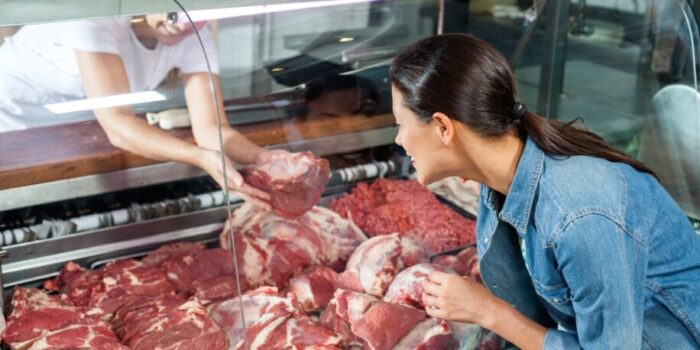
Flight shame, fear of alcohol and meat shame… There are more and more things we are supposedly expected to be ashamed of. As a true carnivore (who really does try to eat more consciously but simply loves meat very much), I struggle with this. It now appears from research that overconsumption of meat costs us €1.1 billion in healthcare expenses every year. Is this the end of my steak?

Wageningen University conducted research commissioned by TAPP Coalition (a partnership of organisations seeking to make the production and consumption of proteins more sustainable) and the Dutch Vegetarian Association. And what does it show? Excessive meat consumption is estimated to cause 253,000 cases of diabetes, 100,000 cases of bowel cancer and 20,000 cases of cardiovascular disease. Together, these would account for €1.1 billion in healthcare costs that, according to the researchers, could be prevented. But if meat is so unhealthy, why is it still included in the Nutrition Centre’s Wheel of Five flyer?
Meat tax
TAPP Coalition believes that dairy and meat are too cheap and that consumers are not being charged a fair price for these products. It therefore advocates a so-called meat levy. Jeroom Remmers, director of TAPP Coalition, said the following about it in Het Parool: “Healthcare costs of more than one billion euros are currently paid collectively by all of us through ever-higher health insurance premiums. A meat tax would reduce consumption, as well as the number of people who become ill.” That meat levy would cause the price of processed meat to rise by €4.30 and that of red meat by €7.50 in cases of excessive meat consumption.
Meat levy debate
There has long been debate about a meat levy and the health effects of meat. “Meat has the highest nutritional value per unit of product,” says Van de Riet, spokesperson for COV (the Central Organisation for the Meat Sector). COV’s counterargument is that organisations such as TAPP Coalition and the Dutch Vegetarian Association want to get rid of the meat industry by any means possible and keep trying to do so in different ways. It is unclear whether the meat levy will be introduced (any time soon). Politically, it is a complicated issue and an extremely sensitive one.
Excessive meat consumption
An important aspect of the research, incidentally, is the term ‘excessive meat consumption’. The recommended amount of red meat is just 6 kilos per person per year. In the Netherlands, we eat five times as much on average—more than 30 kilos! Ellen Kampman, professor of Nutrition and Health, explains the risks. “The link is not as strong as that between smoking and lung cancer. But there is sufficient evidence that consuming red and processed meat increases the risk of bowel cancer. If we ate less meat, it would prevent a great deal of suffering.” Even so, she is not necessarily in favour of a meat levy. With normal meat consumption, you get a great many important nutrients.
Overregulation
It is clear that we should eat less red meat. In my opinion, however, it is not up to the government to determine who can or may eat meat, or how much. (We wrote about government interference before: that time it concerned drinking wine around your children). In my view, a much better option would be to make healthy products cheaper and remove the VAT on vegetables and fruit as soon as possible. In addition, for people on a tight budget, for whom grocery shopping is becoming increasingly difficult (as demonstrated by the queues at the food bank), a meat tax would make it completely unaffordable to obtain essential nutrients from meat.
Read also:
- Snackspert: loempidel is the snack that should be sold in many more places
- Would you keep red meat for three weeks?
- A climate-controlled cabinet for your cheese is a brilliant idea
Source: Het Parool


