



Ragù vs. Bolognese: what’s the difference?
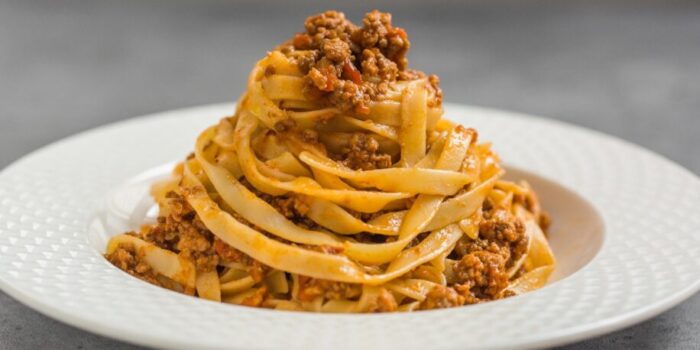
Picture this: tourists in Venice settle down on a terrace, are handed a menu and, after a few seconds, a veil of blind panic spreads across their eyes. Because WHY IS THERE NO SPAGHETTI BOLOGNESE on the menu?? The waitstaff dutifully tries to recommend the tagliatelle al ragù, but sometimes they’ve already run off in a (futile) attempt to try the terrace one further down. That won’t happen to you, because we’re happy to explain exactly what ragù and Bolognese are…

Monica Cesarato, cookbook author, expert in the Italian cuisine and a Venice resident, regularly sees the scenario described above. Her tips and knowledge are worth their weight in gold, and help everyone find their way through the world of cucina autentica. Explained below: ragù versus Bolognese; which is which?
Ragù vs. Bolognese
Let’s get straight to the point: ragù is the collective name for sauce, mainly made with meat. The word originates from the French verb ragôuter, meaning something like ‘to give flavor to’. It dates back to the time when the Romans were in Gaul and guess what: there weren’t any tomatoes in Europe yet! They only arrived here by boat from the New World in the sixteenth century. So ragù doesn’t necessarily have to be tomato-based or red. There are no fixed rules about which meat it should contain either; it can range from pork to beef to lamb to game. In modern Italy, sauces with fish, vegetables and even tofu now also bear the name ragù.
Bolognese particolare
With Bolognese, things get a lot more specific, and we know how angry Italians can get when their dishes are subjected to sacrilege. The mayor of Bologna had already completely lost it over ‘spaghetti Bolognese’: the sauce his city is famous for should be eaten with tagliatelle, tortellini or, if necessary, gnocchi; much sturdier and better suited to the rich sauce than those flimsy, limp strands of spaghetti…
The New York Times (of all publications) also got Italians foaming at the mouth with its recipe for a ‘white’ Bolognese sauce (without tomato). Outrage!! That tomato is the foundation, damn it! And there are a few more sacred laws that authentic ragù alla Bolognese (which they simply call ragù there) must follow: it has to contain bacon (pancetta), wine and milk. Milk, yep!
Piano, piano
Anyway, whether you add milk or not: piano, piano (patience) is the magic word here. After two hours, you’ll probably think it’s perfect (and that your patience has run out), but apparently it only becomes truly excellent after four hours. So one weekend, put a pan like this on a very low heat and, at the end of the day, you’ll be rewarded with the most delicious, most fragrant ragù you could possibly imagine!
Also read:
- 7 things you didn’t know yet about Italian tomato sauce
- Budget cooking: canned tomatoes
- Recipe: the iconic Marinara Meatballs from restaurant Jansz.
Source: The Local It


