




The bubble is about to burst: France’s champagne problem

You may think, ‘I don’t have a drinking problem unless it runs out’, but that last part is exactly what you should be afraid of. Things have not been going well at all for France’s champagne industry since we got caught up in the coronavirus mess, and that could well lead to much less well-stocked shelves.

The weather conditions were virtually perfect this year, apparently. Plenty of sunshine and enough rain at the right time, meaning the beautiful grapes in the French Champagne region are as we speak completely ready to be harvested.
Deep, dark valley
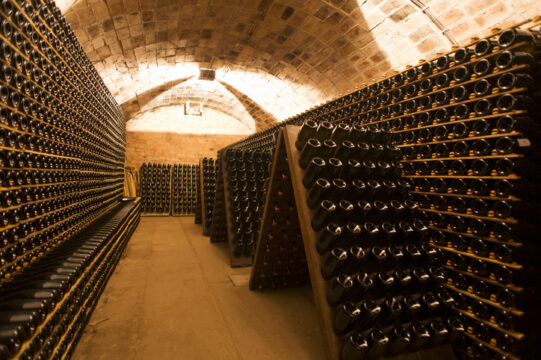
But the economic conditions are, as we know, absolutely terrible. Around a billion (!) bottles of champagne are lying untouched in the cellars of champagne houses, left behind when weddings were cancelled from spring onwards, events were called off, and virtually no one has been in a carefree celebratory mood since March. All of this has caused demand for one of our favourite drinks (also delicious with pizza!) to plummet, and is creating the most tension in the region since the Second World War.
This tension is expected to come to a head during an important meeting on 18 August 2020 between the grape growers and the grape buyers (who act on behalf of the major champagne houses/producers). During that meeting, an agreement must be reached on how many kilograms of grapes the growers may bring to market.
Strict rules
Here’s the thing: this region has the rather exceptional rule that, per hectare and in a single harvest, the vignerons (grape growers) may sell a maximum number of grapes to the négociants (the ‘dealers’ who buy the grapes) for prestigious houses such as Krug, Bollinger and Mumm. Any grapes ‘left over’ beyond that maximum either remain in the fields to rot each year or are stored in cold conditions to serve as a reserve for a year when the harvest is very poor.
And now the two parties (both growers and buyers have united in a Union) want drastically different things: the négociants want only 7000 kg of grapes to come to market, so that producers do not end up saddled with even more millions of unsold bottles. And the vignerons? They are lobbying to be allowed to sell 8500 kg per hectare, so that they are not left with unusable grapes, which they themselves also describe as coming from an exceptionally good harvest. They are less concerned about unsold stock and say that 8500 kg is the minimum they need to keep their heads above water. The consequence if that does not happen? The possible demise of an iconic product.
A tense atmosphere
The tension between the parties is reportedly palpable, and neither is giving interviews in the run-up to 18 August. And what, besides the devastating wave of coronavirus, do insiders say also lies at the root of this crisis? That the balance between the major houses and the small independent producers has been lost. Because they can offer much more money, the major houses have persuaded more and more vignerons to sell their grapes exclusively to them. In addition, it is a growing problem for all champagne makers, growers and producers alike that the younger generation of French people is drinking less and less wine and that competition from other bubblies such as prosecco is increasing. All parties seem pessimistic, whatever the outcome on 18 August.
Santé, s’il vous plaît
Merde, that makes me sad. Yet this wonderful wine and its branch of industry have always managed to recover from a blow for three hundred years. Wars, revolutions and recessions: so far, nothing has managed to knock champagne from its throne as the symbol of ‘this is what you drink when you have something to celebrate’. And even if you may not feel like celebrating, know that just one bottle of the stuff can make a difference. For the makers, and for your mood!
Read also:
- Champagne cheaper this year? That could very well happen, and here’s why
- We love Madonna’s favourite champagne
- This is the most expensive champagne in the world
Source: BBC News


