



The Deposit-Return Scheme for Small Bottles Is a Major Flop: Here’s Why
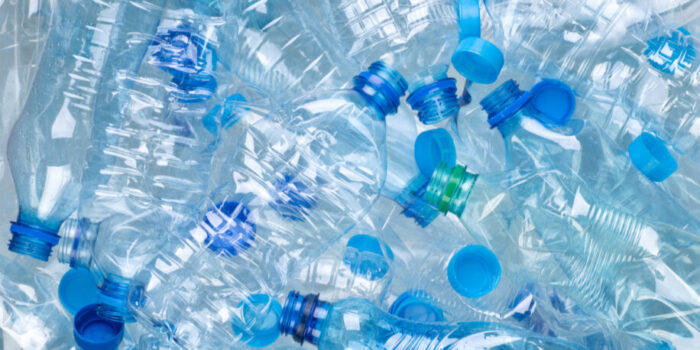
You can hardly have missed it: since July 2021, a deposit has been charged on small plastic bottles. But that new measure is not a success. There are far too few collection points, and many people think the deposit reward is too low. The law seems to be full of holes, and businesses do not seem to be making much of an effort either.

When the new law comes into force halfway through 2021, a clear goal has been set: introducing a deposit on small bottles must account for 90% of the recycling of that type of bottle. Think of small half-liter plastic water bottles. To achieve that goal, the government instructed companies to set up as many collection points as possible. Large companies such as Coca-Cola and Heineken in particular must ensure that the 90% target is reached. But that is where things immediately start to go wrong. After all, how many physical locations do such manufacturers actually have?
Collection points for deposit bottles
Members of Parliament immediately questioned this requirement, which was drawn up by D66 State Secretary for the Environment Stientje van Velthoven. It would make much more sense to set up collection points at train stations, kiosks, shops and petrol stations, for example. But there are hardly any such points to be found there. Het Parool reports that only 5 (large) stations have a reverse vending machine. And that while there are 400 train stations throughout the Netherlands. Um, hello! Isn’t that completely illogical? The station is genuinely a place where people drink from plastic bottles or cans.
No obligation
Another strange aspect of the law: points of sale—such as kiosks and petrol stations—are not required to accept plastic bottles. That is very unfair, especially when you see that mandatory acceptance has been highly successful in countries such as Germany and Norway. Those countries reached the 90% target with ease. For comparison: the most recent Dutch figures show that only 58% of all small plastic bottles ended up in a reverse vending machine. Van Velthoven’s response is that mandatory acceptance will not work. According to Het Parool, the minister stated that ‘with such an obligation for every seller, no single party is responsible for the system as a whole, and it provides no guarantee of a nationwide network’. She also says that companies are not at all eager to take on the costs and responsibilities that mandatory acceptance entails.
15-cent deposit
There is also more criticism of the deposit amount linked to the measure. Critics believe it is too low. Negative comments on this issue were already being made when the law was first presented. The deposit currently stands at 15 cents, while environmental organization Recycling Netwerk Benelux (RNB) says that the amount should be at least 25 cents. At least, if you want people actually to return their plastic bottles. Around 20 years ago, a deposit equivalent to 45 euro cents was charged on large plastic bottles, and you can guess what happened: people returned them in large numbers.
Sanctions
The threat of an inspection visit resulting in sanctions seems to make little impression on many companies. The Human Environment and Transport Inspectorate (ILT) has announced that those sanctions will indeed be imposed. Plus, there will be a penalty payment for the Packaging Waste Fund. This is the organization that—in cooperation with major producers such as Coca-Cola and Heineken—must ensure there are enough collection points. As long as that magical 90% is not reached, the Packaging Waste Fund must pay the penalty. Still, people doubt whether the inspectorate has enough authority when it comes to its sanctions. The inspectorate already stated in 2020 that the deposit law is designed in such a way that it becomes very difficult for them to impose measures such as a penalty payment. For example, there is a legal ruling stating that ‘the Packaging Waste Fund cannot be held responsible for achieving the 90% target because it depends on the performance of other parties in the chain’—according to Het Parool.
Promises
It is a real shame that the deposit law is full of holes. Many plastic bottles end up on the street or in nature. And that while Recycling Netwerk Benelux says that introducing a deposit is one of the most popular environmental measures among the public. The loopholes in the law therefore need to be closed, and businesses need to make a greater effort. The Packaging Waste Fund has at least promised that more collection points will be added—even though that promise has not yet been made concrete. In any case, we are holding our breath for the figures on deposit cans, which will come to light a year from now.
Also read:
- Albert Heijn under fire because of deposits
- Albert Heijn now charges a deposit on plastic bags
- The plastic surcharge: how it works in supermarkets
Source: Het Parool


