


The truth about honey: here’s what it’s really like
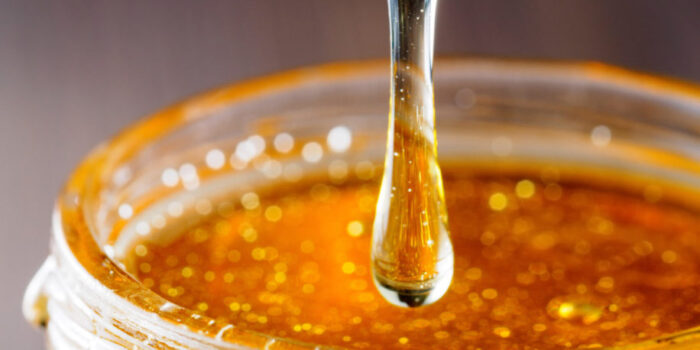
Liquid Dutch blossom honey, Veluwe heather honey, honeycomb honey: what exactly is what? Gerard van de Braak, beekeeper at De Valksche Bijenhof, gives us his advice—and he should know, because he looks after five hundred bee colonies. ‘Cold-spun—that’s actually nonsense. You can’t spin honey warm.’

At the height of the season, when all his bee colonies are at their strongest, Gerard and three employees look after a good 25 million bees. They also breed queens, make honey and sell colonies to other beekeepers. You can safely call him a ‘super beekeeper’. So if you want to learn something about good honey, Gerard is your man.
To start with: vegans wonder whether they can still eat avocados, because the plant is pollinated by bees. Is it sad and unnatural when bees pollinate plants in greenhouses and on farmland?
‘Our bees get to work in spring pollinating redcurrant bushes, and sometimes they work in greenhouses. Do they enjoy it? When we close up the beehive, they’re not exactly thrilled, and transporting them causes a little stress too. But afterwards they arrive somewhere they absolutely love. Vast fields with billions of flowers, where they can eat whatever they want. A paradise, you might say. So in my opinion, you don’t need to feel sorry for the bees.’
How do you explain the price difference between the honey in squeeze bottles at the supermarket and the expensive jars you can buy from a beekeeper?
‘You have to ask yourself what that cheap honey actually is. The cheapest honey comes from South America and China. Recently I saw a jar of honey with an ingredients box on the packaging. I mean: why? Honey is one hundred percent honey, isn’t it? Unfortunately, that isn’t always the case. Especially when you buy cheap honey, there’s a good chance it isn’t completely pure and natural.’
So cheap honey is usually not that good, but does that mean expensive honey is always good?
‘No, it’s not that simple. Take Manuka honey from Australia. It’s supposed to be a kind of miracle honey, healing and restorative—a whole marketing story. And incredibly expensive, too. A group of students from a university of applied sciences investigated it, and what did they find? Our Dutch honey is better than that expensive honey from Australia.’
Honey labels sometimes say: cold-spun. What does that mean?
‘A slightly strange term, because honey is always spun cold. Suppose you heated the honeycombs before spinning them: the wax from the honeycombs would melt too, ending up in your honey in small pieces. That isn’t the intention. All the honey you buy in supermarkets is heated anyway. That causes valuable enzymes in the honey to be lost, and those are precisely what’s so healthy for you. If the honey crystallises, you can safely warm it gently in a saucepan au bain-marie until it’s clear again, but that’s all.’
What about honey in tea?
‘That makes me laugh a little. People do it to get rid of a sore throat, or because they’re coming down with a cold. But if you put honey in boiling-hot tea, all the beneficial substances in the honey really are gone. You should let your tea cool down and then stir in the honey, but cold tea doesn’t sound very tasty to me either. Just take a spoonful of honey straight from the jar. That’s much better.’
And organic honey—is that always good?
‘In the Netherlands, yes, although a lot of honey here is organic without being certified. That certificate costs a lot of money and time because of all the administration involved. On the other hand, most organic honey from Germany comes from bees that fly around the Ruhr region. Very organic!’
Are there any other important differences between beekeeper’s honey and supermarket honey?
‘The flavour, of course. In supermarkets, you can buy almost nothing but blends. Dutch beekeepers harvest dozens of different honey flavours and keep them separate. The flowers that provide the nectar determine the flavour of the honey. So you might get Veluwe heather honey with a very strong, spicy flavour, as well as typical spring honey with a mild, fruity note.’
If you want to be sure you’re getting something good, which honey should you buy?
‘Then I would buy local honey. Simply find out where there’s a beekeeper nearby and go there. That’s quite different from large companies that remain anonymous. The very best? Honeycomb honey, so with a piece of honeycomb still in the jar. Nothing is done to it at all; it simply comes straight from the beehive and is put into a jar. It’s about a certain mindset: I see people happily paying thirty euros for a kilo of eel, but then five euros for a jar of good honey is too expensive. As a consumer, you have the power to decide what you buy and where you spend your money. If we keep buying everything as cheaply as possible, quality will suffer—that’s unavoidable.’
Read also:
- Recipe: stuffed pitas with halloumi and honey
- Forage your lunch: you’ll find these edible flowers and herbs along the roadside
- Take your salad to Michelin-star level


