



These are the differences between Chinese, Indonesian and Surinamese bami
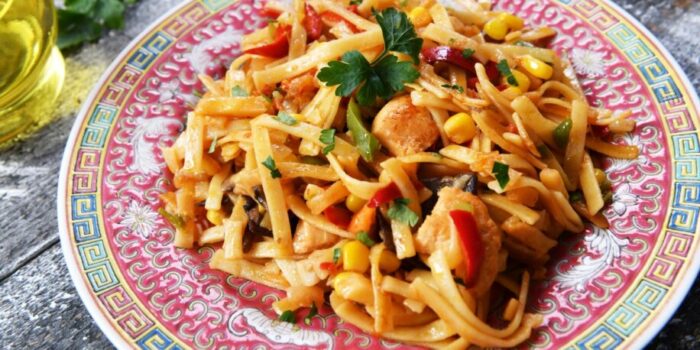
We love bami. And there is plenty to choose from. So will you go for Chinese, Indonesian or Surinamese bami? You can only make that choice if you know the differences. That’s what we’re going to take a closer look at today.

In the Netherlands, we mainly know bami thanks to immigrants from the Dutch East Indies. They came to our country in large numbers after the Second World War. As a result, more and more Chinese-Indonesian restaurants sprang up, putting bami on the menu. But in a milder form (so not as spicy) and in larger portions.
Chinese bami
China is the birthplace of bami. That’s where bami originally comes from. The word ‘bami’ comes from the word ‘bakmi’, which loosely translated means ‘pork wheat noodles’ in the Chinese Minnanyu language. So traditional bami contains pork. Ham, for example. Some Chinese bami dishes also contain pieces of chicken. The noodles are off-white, fairly flat and about half a centimetre wide. Chinese bami contains plenty of vegetables. There is quite a bit of freestyle involved, but generally you often see onion, leek, spring onion, carrot and pak choi. And the seasonings? Think mainly soy sauce, sesame oil and garlic. Plus bean sprouts and egg to finish it off. This is our favourite Chinese bami recipe.
Indonesian bami
Good food rarely stays within national borders. The same goes for bami. The Chinese brought bami to Indonesia. The name ‘bami goreng’, or ‘fried bami’? That was coined in Indonesia. As were various versions of the original Chinese bami. For example, you won’t find pork in Indonesian bami, because Indonesia is predominantly Muslim. Instead, bami is mainly made with chicken or prawns. Indonesian bami is generally more heavily spiced and hotter than Chinese bami. It often contains some kind of chilli or sambal. We love this Indonesian bami goreng.
Surinamese bami
From Indonesia, bami eventually made its way to Suriname. It was the Javanese who brought bami to Suriname as a kind of souvenir. The Surinamese eventually went all out to make their own bami. What is typical of Surinamese bami? The thin noodles. Essentially just spaghetti. In Surinamese bami, chicken is often the protein. As is a mix of salty and sweet ketjap, which gives the bami its characteristic dark colour. Surinamese cooks also like to play around with ingredients they use frequently in their cuisine, such as Madame Jeanette (nice and spicy!) and trassi. Check out our favourite Surinamese bami dish here. And do you know what’s extra delicious with Surinamese bami? Surinamese meatballs!
Also read:


