


This is why banana candies taste so intensely banana-like
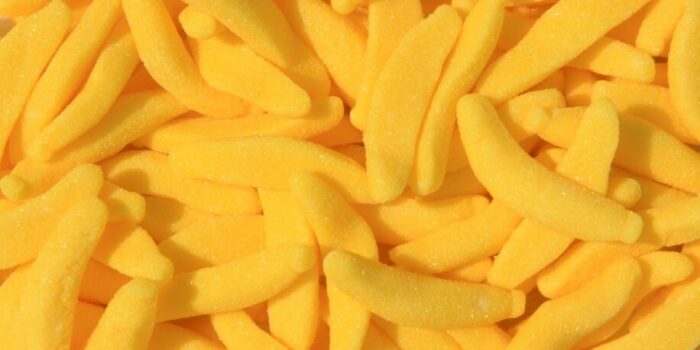
Favorite childhood food memories are something we all have. I still dream of that disgustingly delicious supermarket doughnut with yellow banana-flavored icing. Another pleasure from the past is foamy candy. Addictively delicious, but they don’t actually taste like a banana—how is that possible?

It’s strange but true: everything made with an artificial banana flavor smells and tastes completely different from one you’ve just (probably the wrong way) peeled. Pretty odd, but it’s not entirely made up.
The real banana flavor
Quite the opposite. The banana flavor we all know from yellow candies dates back around 160 years. Naturalists discovered a bunch of Gros Michel bananas high up in a tree. It turned out to be perfect: deliciously sweet and easy to grow. It’s no surprise that these bananas became a worldwide hit. People were so fond of them that the flavor was recreated and put into all kinds of things. From cookies to ice cream, and from candy to drinks.
Banana crisis
But because of the Panama disease in the 1950s, when a fungus ravaged the banana trees, nothing was left of the Gros Michel banana variety. The variety was completely wiped out. A banana crisis arose, and people began searching for a new banana variety. That became the Cavendish—the bananas we eat today.
Banana-like
And that flavor is actually quite different. That’s because the Cavendish contains little of the compound isoamyl acetate, whereas the Gros Michel contains a lot. That’s why we use isoamyl acetate in products we want to give a banana flavor. All thanks to the deliciously sweet Gros Michel of the past.
Read also:
- Can you eat green bananas—and more pressing banana questions answered
- Super simple, incredibly delicious: caramelized bananas from the Airfryer
- Recipe: Sticky banana cake with syrup sauce


