



This is why even clean beer glasses are rinsed once more first
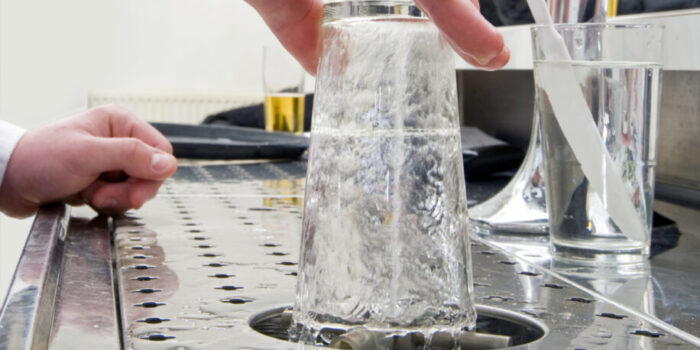
Even if it was a long time ago, if you poured a lot of beer in the hospitality industry, a certain set of movements is probably still etched into your muscle memory: rinsing glasses (two at a time), holding them under the rinsing nozzle with a psssjjjt psssjjjt, and then placing them on the draining section. (If you know, you know…) And also, when you’re completely ‘on top of’ the rinsing: holding the glasses you pull from the stack to use under the nozzle for another quick psssjjjt. And it’s precisely that final psssjjt that many people wonder about. We’re happy to tell you what it’s for!

In the first case, it’s clear; you’re rinsing away the (special) soapy solution in which the glasses have just been run over the upright brushes. Nobody wants a trace of soap in a beer glass, because of the taste and the overall grossness if your glass hasn’t been rinsed properly. But in both cases, and especially the latter, it also has everything to do with foam…
No sticky business
Because when you pour pilsner, or another beer with a high carbonation level, you don’t want all that carbonation to cling to the inside of the glass. If that happens (because of grease but also dryness), the head dies at the top, while that’s exactly where you want a good concentration of carbonation for beautiful, thick foam. That’s why a clean glass is also wetted briefly before beer is poured into it. When the inside of the clean glass is wet, it’s more slippery, and the carbonation can’t cling to it as easily due to the lack of friction. And that, in turn, results in a firm head of foam at the top of the glass!
A fun fact, right? And if that’s made you thirsty, also read this article about beer cocktails or these great beer and cheese pairings; delicious!
Read also:
- You have to love it: beer with goose droppings
- Recipe: Beer can chicken
- Thirsty tales Weizen vs. witbier: what’s the difference?


