


Trend: champagne beer
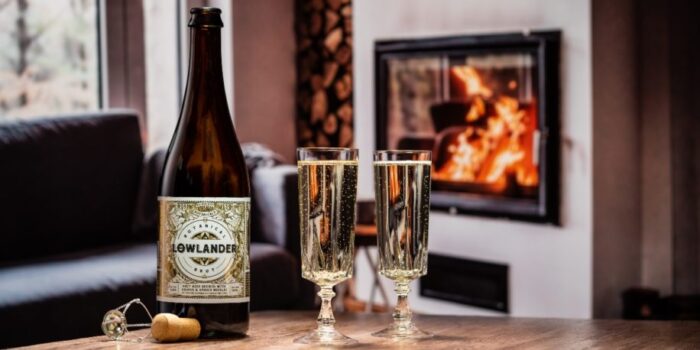
As the end of the year approaches, there’s plenty of celebrating as always, and champagne corks fly around your ears. Champagne has never been more popular in the Netherlands, because after all that prosecco rubbish, we’re ready for quality bubbles. For people who would rather toast with a beer, there’s a festive trend: champagne beer.

Protected species
The name champagne beer actually shouldn’t be used, because champagne is of course a protected species. The French are probably turning in their graves. Most champagne beers therefore come from Belgium rather than the world-famous region. The beer is made somewhat like champagne. It matures in the bottle for months with champagne yeast. The bottles are stored at an angle, with the neck pointing downward, in a dark room, after which the yeast is blasted out of the bottle by freezing. Because of the secondary fermentation in the bottle, the alcohol percentage is usually somewhat higher.
Used needles
Dutch brewers have also discovered the champagne hype by now. Grolsch recently launched Finale, made with grapes and champagne yeast, for special bubbly moments. And last week we tasted Lowlander’s Botanical Brut, a limited-edition sparkling beer with spruce and champagne yeast. Completely on trend, then. The used spruce needles provide citrusy and gooseberry notes. And a special hop (Nelson Sauvin) creates Sauvignon Blanc-like aromas.
Beer pairing
This champagne beer is excellent as an aperitif, naturally served in a coupe glass or flute, but it’s also fun to serve during dinner, because beer pairing is of course another trend. The dry taste of Lowlander Botanical Brut goes very well with rich bites, such as charcuterie and cheeses like a creamy camembert. Or, naturally, with a crisp oliebollen. Salut!
Also read:


