



Wait a minute: how Japanese is Japanese mix?
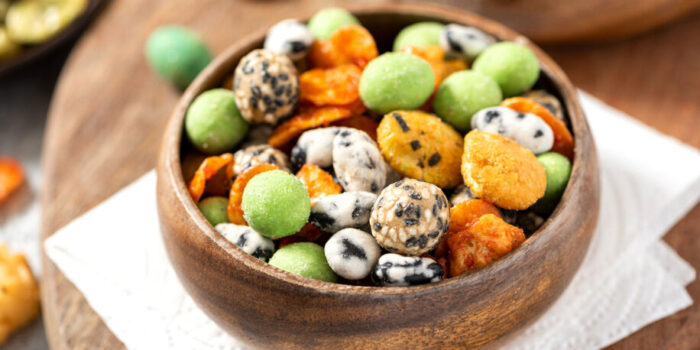
Those white sesame-coated balls, the sweet-and-salty sticks and those white flower-shaped crackers: everyone knows Japanese mix. It’s cheap, you toss a handful (or two, or ten) into your mouth at every drinks party, and it contains fewer calories than cocktail nuts or crisps, so it’s more or less a responsible choice. But: is it actually Japanese? Experts take a closer look at the mix.

Japan is a culinary paradise, including when it comes to sweets, snacks and bites. In the konbini, the small convenience store, you’ll find all kinds of bags filled with exotic nibbles. The collective name is ‘senbei’; most are made from rice flour, steamed and then given a flavour. And yes, among those senbei are also the little things we find in Japanese mix. Those spicy worms? Bingo. They have the balls too, just like the ridged sticks. But – and here’s the thing – not all together in one bag.
No squid
So, you can buy each component of Japanese mix separately there. The favourite, the balls, is called ‘Arare’ in Japan. Other Japanese snacks might be slightly less popular here, such as small dried fish, squid and seaweed. And those peanuts in Japanese mix? They have no business being there; they’re simply included to fill the bag cheaply.
Mixing is Western
The expert on this subject, The Sushi Times, also writes that those spicy round crackers are widely eaten in Japan. They’re called ‘Togarashi senbei’, and that spicy spice blend is called shichimi togarashi. The Japan expert’s conclusion: Japanese mix is Japanese, but also kind of isn’t. The snacks themselves are reasonably authentic (apart from the peanuts), but our tendency to throw everything together is typically Western.
Read also:
- Japanese vs American mayo: what are the differences?
- 6 unusual combinations with Japanese mayonnaise
- Have you ever eaten Japanese curry?
Source: The Sushi Times


