


Weekend tip: the exhibition ‘Amsterdam Eats. A History in Dishes’
In 2025, Amsterdam celebrates its 750th anniversary. The Allard Pierson Museum is contributing with a fascinating exhibition about cooking and eating in Amsterdam. On a journey through 750 years of food culture, you can see what was on Amsterdammers’ plates. Cookbooks, menus, archaeological finds, manuscripts and other sources provide insight into the city’s culinary traditions right up to the present day. It turns out that Amsterdam’s residents have always had a ‘curious stomach’.

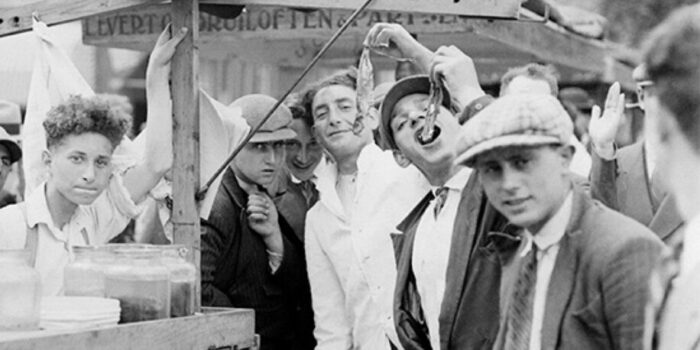
The exhibition about Amsterdam’s food culture places dishes at its heart: from everyday fare to haute cuisine, from delicacy to medicine. It begins with herring, which was on the menu for rich and poor alike in the Middle Ages, even at breakfast. The final dish is nasi goreng, a symbol of the melting pot of flavours in the post-war city.
From oliebol to kroket roll
The other dishes are oyster pie, made with exclusive spices that also played a role in medical theory; oliebol, already a popular treat in the 17th century; venison (roast), a centrepiece on lavishly laid tables in 18th-century canal houses; steak, a favourite in Amsterdam restaurants; stamppot, made with the potato that was indispensable to so many Amsterdammers; zuur, inextricably linked to Amsterdam’s Jewish community; and the kroket roll, an important part of post-war food culture.
Each dish is accompanied by a cookbook from the Allard Pierson collection, supplemented by other cookbooks, objects and recipes. Highlights include the only known copy of Amsterdam’s oldest cookbook, dating from 1617, and a unique Portuguese-Jewish recipe manuscript from around 1800.
Iconic to Amsterdam
The exhibition shows not only what people eat, but also who eats it, when and where. Prints, paintings, drawings and photographs show how food culture is both a reflection of the city and a driving force behind urban development. Old maps reveal markets and places to eat, such as inns in the city centre, country estates where the elite grew vegetables, grand canal houses with kitchen staff, and the 19th-century middle-class neighbourhoods and working-class districts where a very different food culture prevailed.
In the 18th century, many influences came from France; a century later, elegant restaurants modelled on those in Paris appeared. Various migrant cuisines made their entrance, while sandwich shops and snack bars began shaping the streetscape. Time and again, new foods become iconic in Amsterdam, sometimes resulting in endless queues outside.
Food trends
The exhibition also offers a look at the role of food and eating in today’s city, as well as the challenges of the future. Contemporary Amsterdam chefs and experts have been invited to provide insights from their fields in connection with various dishes and themes. New food trends such as seasonal eating, vegetarianism and sharing recipes turn out not to be new at all.
Amsterdammers at the table
Together with seven representatives from all of Amsterdam’s city districts, the museum is developing a presentation about the diversity of food cultures in the city. Guided by visual artist Malou Sumah, the participants share their personal stories about cherished dishes, table customs and traditions surrounding the dining table. These stories are brought together in a collective textile artwork. Conversations ‘at the table’ with the seven representatives have been captured on film. Visitors can also contribute to the growing tablecloth themselves. The exhibition thus concludes with an icon of the diverse food cultures of present-day Amsterdammers.
‘Amsterdam Eats. A History in Dishes’ takes place at the Allard Pierson, Oude Turfmarkt 127, from 11 April through 7 September 2025.
Read also:


