



Whààt: deposit on bottles may increase (to an insane amount)
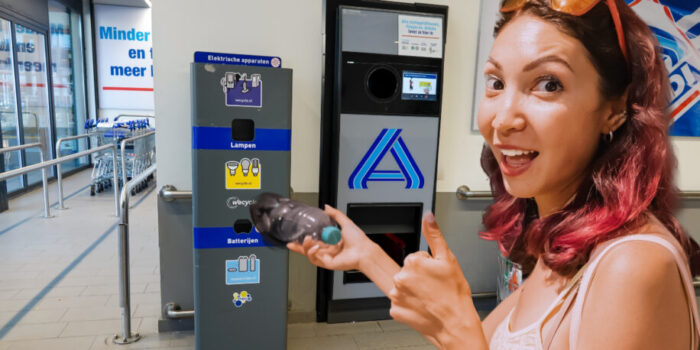
Deposit is intended to combat pollution and reuse plastic. But since the introduction of deposit on bottles and cans in 2021, tempers have been running high. People complain bitterly about faulty machines and actually more litter. The municipality of Amsterdam has incurred millions of euros in additional street-cleaning costs since the introduction of deposits on cans and plastic bottles. And since there is quite a bit of money to be made by returning plastic bottles and cans, there are also many more homeless people and addicts in the city. And now there are plans to increase the deposit?!

Het Financieel Dagblad obtained confidential research that reportedly shows that an amount of €1 for large bottles and €0.50 for small bottles leads to the greatest willingness among consumers to return bottles.
Higher deposit amount
People are more likely to take their empty bottles to a collection point when the deposit amount is higher, concludes the research submitted by the Verpact foundation to the Human Environment and Transport Inspectorate (ILT), the fd writes. Verpact is responsible for collecting deposit bottles on behalf of the business community—but the foundation has failed for years to meet the statutory target of collecting 90% of all bottles sold.
Business community not happy
Supermarkets and beverage manufacturers are far from enthusiastic about the possible deposit increase. They fear lost sales if consumers have to pay more when buying a bottle. “Customers find it difficult to separate the deposit from the price of a drink, and as a result they will buy less,” manufacturers reason. I can understand that. A 1.5-liter bottle of Coca-Cola now costs almost three euros—quite a lot of money for people who drink Coca-Cola every day. It would of course be better not to drink it at all, but as a liberal, I’ll let you decide that for yourself.
Rummaged-through trash cans
In the coming months, the regulator will decide whether to actually introduce an increase. If that happens, I wouldn’t be surprised if it fails to solve the problem of litter and other nuisance. “New job: collecting bottles full-time,” someone already wrote on Instagram. Another wrote: “Find 2,600 bottles a month as a homeless person and you have an average income.” “Think I’m going to start rummaging through the trash too 🙄” and: “Soon they’ll be stealing cans right out of your hands.”
Well… if there is so much money to be made from empty bottles, I’m afraid a great many trash cans will be rummaged through..
Also read:
- Albert Heijn wants to print the CO2 consumption of your groceries on the receipt; isn’t that a little hypocritical?
- 10 products supermarket employees don’t know
- Drama: inflation is also affecting supermarket pizzas (and not just a little)
Source: fd.


