


What does that one letter on the packaging say about healthy eating—is the Nutri-Score actually useful?
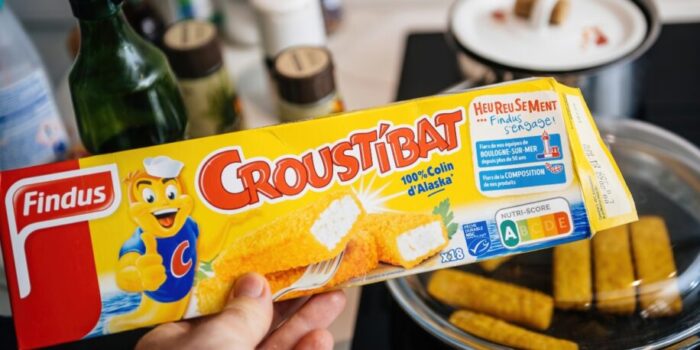
Have you seen it yet? The Nutri-Score? A little letter on the packaging of your ontbijtkoek, peanut butter or frozen pizza tells you how healthy your groceries actually are. It’s not exactly clear, because how can a jar of mayo get the maximum score—isn’t that just pure fat? And why isn’t there a letter on a cucumber or an apple?

The Nutri-Score is a symbol with five letters, from A to E. A is the best score, E is the worst. The new symbol is intended to put an end to all the different logos on food products that promise they are healthy. The Nutri-Score had existed in France for years, and in the Netherlands various organizations, including the Consumers’ Association, lobbied hard until the score finally also appeared in Dutch supermarkets in 2020.
Carton of low-fat yogurt: D
How does it work? The labels are assigned within a product group. Products containing protein, fiber, fruit, vegetables, legumes or nuts receive bonus points; lots of calories, sugar, saturated fat or salt bring the score down. And this is where the problem lies: the products are compared with one another within the product group. That can mean that a packet of chocolate sprinkles gets a B, which is fairly high, while a carton of low-fat yogurt gets a D. A little odd, right?
Guilty pleasure
That’s what Willem de Gelder thought, anyway, when he was craving something greasy and bought a tasty frozen pizza. Nutri-Score of his guilty pleasure: B. How can it be a B, he thought. Surely pizza is never a healthy choice anyway? And what’s on a pizza with a D or E score—nuclear waste? Willem: those few wilted slices of mushroom probably just lift your pizza above the rest. It could easily be that Hawaiian pizza gets an A: vegetables and fruit on one pizza!
Why is the ‘nutri-score’ on this a B? What would E be, then? Nuclear waste? pic.twitter.com/WvktlKr3Wf
— Willem de Gelder (@WdeGelder) June 11, 2022
Cauliflower crust
His Twitter followers rightly point out that the Nutri-Score is not nearly as clear as it seems. Not comparing a net of oranges with a box of frikandellen—that still makes reasonable sense. But in the category of Willem’s pizza funghi, are only other frozen pizzas included? Or all oven-ready products from the freezer? Or is it about all pizzas, including the fresh pizzas by the vegetables and pizzas with, for example, a cauliflower crust? Questions, questions—and no answers.
Tub of ice cream
In short: if you fill your shopping cart with products carrying a B or A score, you could just as easily be checking out with crisps, soft drinks, tubs of ice cream and frozen pizzas. Not exactly what you’d call a healthy eating pattern, but hey: your Nutri-Score is in the green, so no worries!


