


What’s wrong with supermarket frankfurters
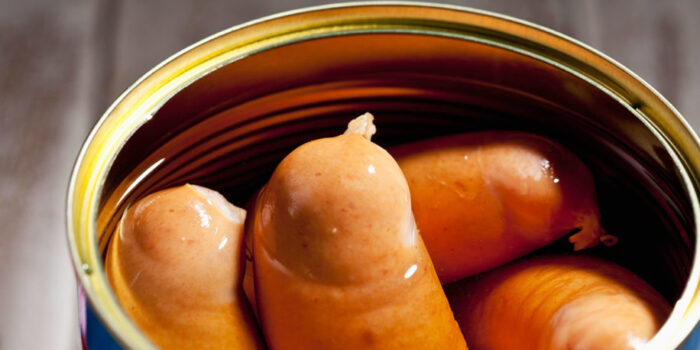
Frankfurters: quite apart from the fact that we hope you don’t eat them every day, because, um, they’re obviously not exactly good for you, these humble sausages evoke quite a bit of childhood nostalgia for many people. Children’s parties, camping, school trips: many of those moments involved opening a tin of these sausages, heating them up, and then smothering the frankfurters in ketchup on a bread roll. Party!

The fact that they are called frankfurters rather than ‘bend-and-break sausages’ is probably because they originally had a firm casing that really made a cracking sound when you bit into them or snapped the sausage in half. These days, many supermarket sausages are a rather bland alternative; limp, floppy little sausages that bend and tear easily and seem to have exactly the same texture inside and out. And that’s a shame…
Sad sausage
Keuringsdienst van Waarde investigated: why don’t frankfurters crack anymore? Along the way, the young researchers learned a great deal about the modern frankfurter, and it wasn’t always cheerful.
Off taste
Butcher and cured-meat expert Paul van Trigt, who tasted a large number of factory-made sausages, pointed to the contents: mechanically prepared pork, which he identified as separator meat pressed from, among other things, bones, and which therefore doesn’t taste like meat. He encountered unusual smells and flavors, and the crack itself was disappointing too. It left this butcher thoroughly unhappy.
It’s not impossible
At another factory, they were working hard to restore the frankfurter’s crack in all its glory. The key ingredient? Thin sheep intestine, the casing for the sausage filling that creates the best crisp crack. If you see ‘sheep casing’ on a label (another term for the small intestine of a sheep), that’s a good sign, crack-wise.
Technically clever doesn’t always mean tastier
Most factory-made sausages from the supermarket’s tested house brands obtain their casing in a completely different way: by spraying the sausage meat with a layer of beef collagen (which comes from cattle hide), followed by a brine bath. Quite different, then, from actually filling a piece of intestine with sausage meat, as sausages have traditionally been made.
Conclusion: you deserve better
In short: the much cheaper supermarket sausages have largely driven out the more expensive natural-casing variety. With a real frankfurter, you hear a clear crack when you break it or bite into it, and that really is the tastiest. So do look for better quality, and then make yourself—or serve at a party—one of Jord Althuizen’s generous hot dog rolls!
The full online episode of Keuringsdienst van Waarde is fun to watch (except when frankfurters are being thrown around), and you can find it here.
Also read:
- Corona cooking means the comeback of the frankfurter
- 5 things you shouldn’t do if you want delicious sausages
- This is the biggest and most expensive hot dog you can buy (but whether you want it is another question)
Source: Keuringsdienst van Waarde


