



Why are grilled cheese sandwiches always cut diagonally?
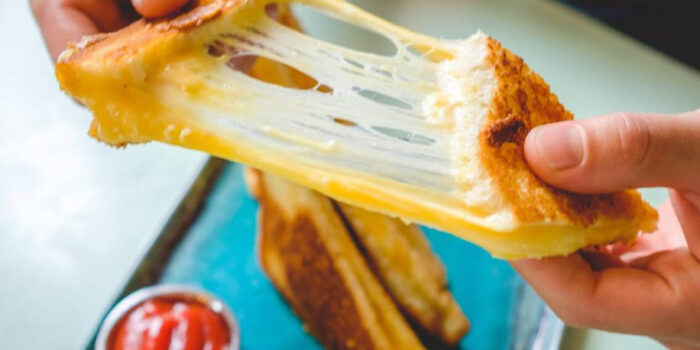
Whether they’re pan-fried grilled cheese sandwiches, xxl grilled cheese sandwiches, egg-in-a-hole grilled cheese sandwiches, super-deluxe grilled cheese sandwiches, vegan grilled cheese sandwiches, cafeteria grilled cheese sandwiches or soggy grilled cheese sandwiches: grilled cheese sandwiches are cut diagonally. But why exactly?

Everyone knows: you cut a grilled cheese sandwich diagonally. Well, almost everyone. Recently, I found myself in a situation where someone casually cut her grilled cheese sandwich straight across. Not just me, but the people next to me also watched in astonishment, until someone said: “NO! You really can’t do that! Grilled cheese sandwiches are cut diagonally; anything else is sacrilege.” I nodded vigorously in agreement. But later I wondered: why? Why is diagonal better? So I investigated.
Grilled cheese theories
To start with a disappointing announcement: there is no truly definitive answer. There are, however, all kinds of theories. I’ll list them for you:
- A grilled cheese sandwich looks bigger when it’s cut diagonally. Of course it isn’t really, but just take a look for yourself. It really does seem that way. And well, more grilled cheese = more happiness.
- A diagonally cut grilled cheese sandwich is easier to dip into sauce.
- By cutting it diagonally, you have a larger surface area where your tongue makes contact with the melted cheese.
- That larger diagonal ‘cheese surface’ makes a cheese pull more likely. For the grilled-cheese newbies among us: a cheese pull is the strands of melted cheese that appear when you pull the sandwich apart. In other words: the ultimate delight. Still no idea? See the photo with this article.
- It simply looks better. Or – as this article explains it – “It’s like a burlesque dancer: covered enough to be seen as clothed, but uncovered enough to be (very) attractive.”
- By cutting it diagonally, you have a larger surface without crust. The amount of crust, of course, doesn’t actually change. But the relative ratio is different, which makes it feel as if you have less crust.
Also read:
- Tips for the ultimate grilled cheese sandwich
- The best melting cheeses for your grilled cheese sandwich
- How to make the grilled cheese sandwich from the film Chef


