


Why Do You Pay More for Spaghetti Than Macaroni at the Supermarket?
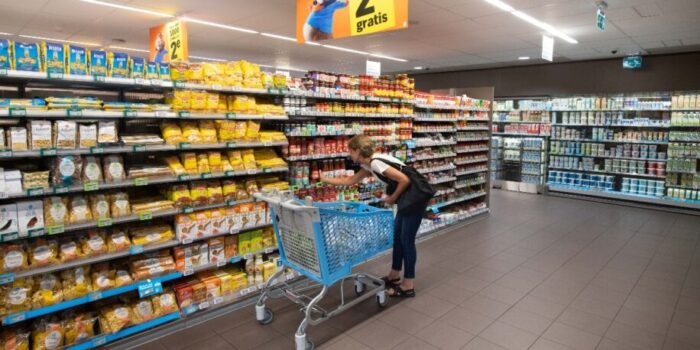
In the Netherlands, spaghetti is more expensive than macaroni, while in Italy you pay the same for both types of pasta. How does that work? Keuringsdienst van Waarde delved into the wondrous world of pasta and discovered: nothing can explain that price difference.

Making pasta is actually not that difficult. A dough made from durum wheat and water is pressed through a mould, which gives it its shape. Whether you make long strands and call them spaghetti, or curved hollow tubes and put ‘macaroni’ on the packaging, the work is the same. It’s actually strange that in Dutch supermarkets, spaghetti is often more expensive than macaroni. Just compare: a bag of macaroni costs 1.79, while a bag of spaghetti costs 1.99 (the same brand, the same supermarket). Mysterious!
Spaghetti more expensive than macaroni: hello, that doesn’t make sense!
Keuringsdienst van Waarde approached the manufacturer. Their explanation: a different dough composition and a different way of cutting the pasta. ‘However, that’s not correct,’ Keuringsdienst van Waarde discovered. ‘Just like in Italy, all types of pasta are made from the same kind of dough. The cutting process is not different either. The dough is pushed through a mould under high pressure. This gives you straight strands, a spiral shape or the familiar elbow shape many of us grew up with.’
Al dente
The researchers also discovered that this price difference does not exist in Italy. Converted to a price per kilo, you pay roughly the same for every type of pasta there. But there is one difference: the cooking time. Italians like to eat their pasta al dente, meaning that you should still have to put a little bite into it. If the packet says to cook it for 12 minutes, Italians take the pasta out of the water after about seven minutes. But then again, that can’t explain the price difference either.
So it remains a mystery why we pay more for spaghetti. Do you know?
Also read:
- Panic: a pasta strike is looming in Italy
- 25 types of pasta, because we just can’t get enough of them
- Staff meals in the hospitality industry: there’s a lot of suffering
Image: Albert Heijn


